


 PVD Coating
Introduction
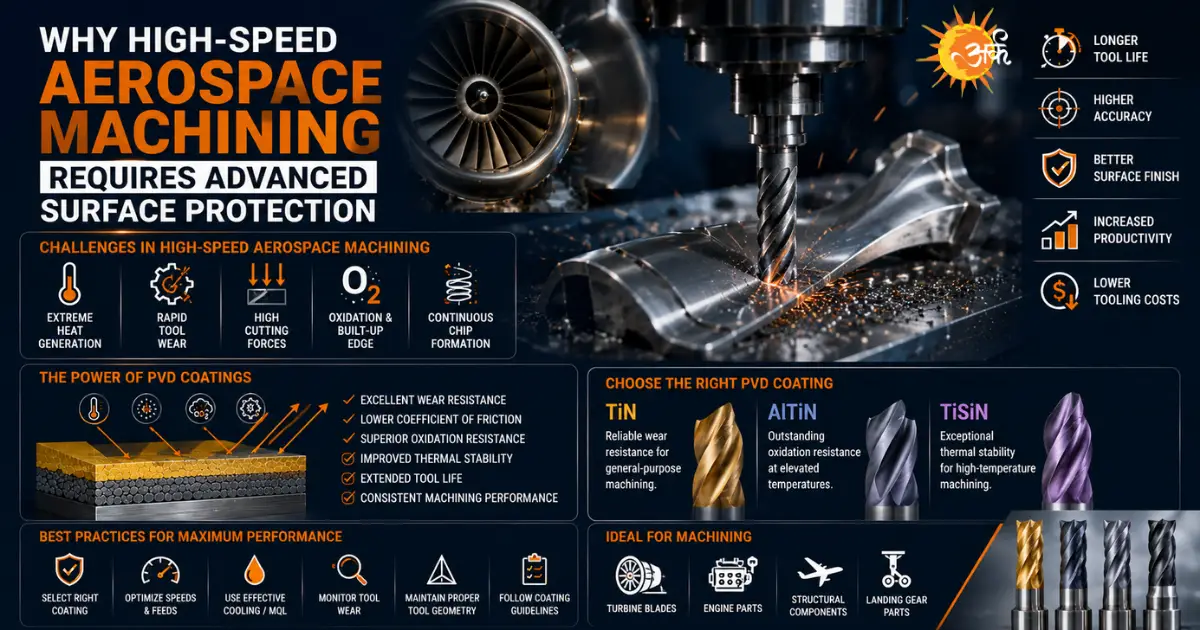
Understanding Why High-Speed Aerospace Machining Requires Advanced Surface Protection is essential for manufacturers striving to improve productivity, machining accuracy, and tool longevity. Aerospace components are commonly manufactured from titanium alloys, nickel-based superalloys, and hardened steels—materials renowned for their exceptional strength but equally notorious for their poor machinability. At high cutting speeds, extreme temperatures, friction, and mechanical loads accelerate tool degradation. Advanced surface protection has therefore become a necessity rather than an option for maintaining consistent machining performance.
Understanding High-Speed Aerospace Machining
High-speed machining (HSM) involves operating cutting tools at significantly higher spindle speeds and feed rates than conventional machining. The objective is to remove material more efficiently while producing superior surface finishes and tighter dimensional tolerances.
In aerospace manufacturing, HSM is widely used for machining turbine blades, structural components, engine housings, landing gear parts, and precision assemblies where accuracy is non-negotiable.
Why Aerospace Materials Are Difficult to Machine
Aerospace materials are specifically engineered to withstand high temperatures, corrosion, and mechanical stress. Ironically, these same characteristics make them challenging to machine.
Common machining difficulties include:
- High material strength
- Low thermal conductivity
- Work hardening tendencies
- High-speeHigh chemical reactivityd airflow
- Continuous chip formation
These properties increase cutting temperatures and place extraordinary demands on machining tools.
Challenges Faced During High-Speed Machining
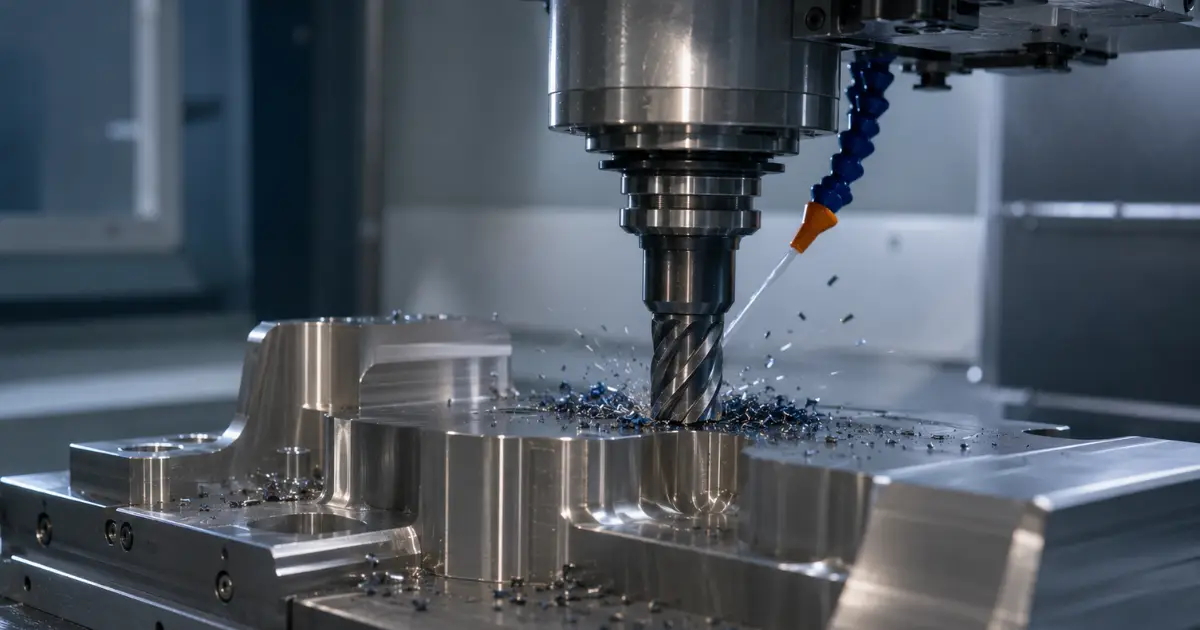
Extreme Heat Generation
During high-speed cutting, a substantial amount of heat is generated at the interface between the cutting tool and the workpiece. Because titanium alloys conduct heat poorly, much of this thermal energy remains concentrated near the cutting edge, accelerating wear.
Rapid Tool Wear
Excessive friction and elevated temperatures contribute to abrasive, adhesive, and diffusion wear. Without adequate surface protection, cutting tools lose their sharpness quickly, reducing machining precision and increasing tooling costs
High Cutting Forces
Despite high spindle speeds, aerospace alloys often require considerable cutting forces. These forces subject tools to repeated mechanical stress, increasing the risk of edge chipping and premature failure.
Oxidation and Built-Up Edge
At elevated temperatures, oxidation weakens tool surfaces, while built-up edge (BUE) forms as workpiece material adheres to the cutting edge. Both phenomena compromise machining quality and shorten tool life.
Why Surface Protection Is Critical
Surface protection significantly enhances a cutting tool’s ability to withstand demanding machining conditions.
A properly engineered protective coating acts as a barrier against friction, oxidation, adhesion, and wear while maintaining edge sharpness. This improves dimensional accuracy, reduces tool replacement frequency, and enables more stable machining operations.
Manufacturers increasingly depend on industrial coatings for extreme machining environments to ensure reliable performance during continuous high-speed production.
The Role of PVD Coatings in Aerospace Machining
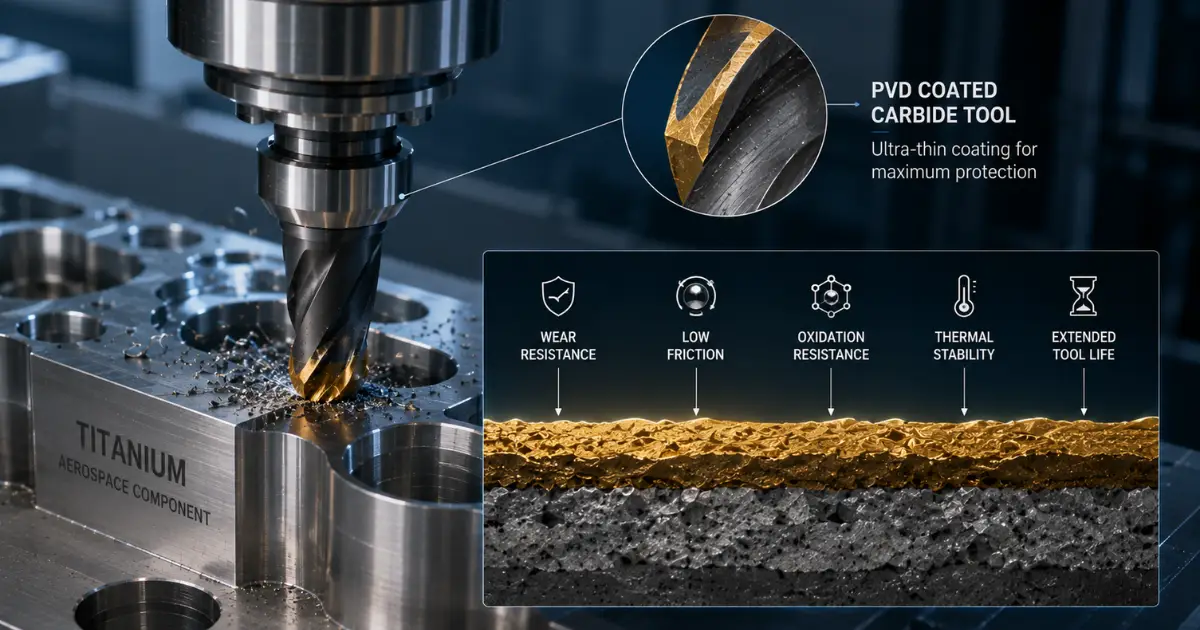
Physical Vapor Deposition (PVD) coatings have become one of the most effective technologies for protecting cutting tools used in aerospace machining.
Understanding how the PVD coating process improves tool performance explains why these coatings are widely adopted throughout the industry. PVD deposits an ultra-thin, highly adherent ceramic layer that increases surface hardness while reducing friction and resisting oxidation.
Today’s PVD coating for high-speed machining applications provides:
- Excellent wear resistance
- Lower coefficient of friction
- Superior oxidation resistance
- Improved thermal stability
- Extended tool life
- Consistent machining performance
For engineers seeking a deeper understanding of machining behavior, research on high-speed machining of aerospace materials offers valuable insights into cutting mechanics, heat generation, and tool wear mechanisms.
Choosing the Right PVD Coating for Cutting Tools
Selecting the correct coating depends on workpiece material, cutting speed, operating temperature, and machining strategy.
Manufacturers frequently perform an AlTiN vs TiSiN vs TiN coating comparison to identify the most suitable coating for aerospace tooling.
- TiN provides reliable wear resistance for general-purpose machinin
- AlTiN offers outstanding oxidation resistance at elevated temperatures
- TiSiN coating for high-temperature cutting tools delivers exceptional hardness retention and thermal stability, making it particularly effective for machining heat-resistant aerospace alloys.
The best coating balances hardness, toughness, adhesion, and thermal performance according to the specific machining application.
Benefits of Advanced Surface Protection
Applying advanced surface coatings delivers measurable operational benefits throughout the manufacturing process.
Key advantages include:
- Longer cutting tool life
- Higher machining speed
- Improved dimensional accuracy
- Better surface finish
- Reduced machine downtime
- Lower tooling costs
- Increased production consistency
These improvements contribute directly to greater manufacturing efficiency and lower total operating costs.
Best Practices for Maximizing Tool Life
Surface protection performs best when combined with optimized machining practices.
Manufacturers should
- Select coatings matched to the workpiece material
- Optimize cutting speeds and feed rates
- Use appropriate cooling or minimum quantity lubrication (MQL)
- Monitor tool wear regularly
- Maintain proper tool geometry
- Replace worn tools before catastrophic failure
- Follow recommended coating application procedures
A holistic approach maximizes both coating performance and machining productivity.
Future Trends in Aerospace Machining
As aerospace materials continue to evolve, cutting tools must withstand even higher temperatures and more demanding machining conditions.
Emerging developments include:
- Nanocomposite PVD coatings
- Multi-layer ceramic coating architectures
- AI-driven tool wear monitoring
- Hybrid coating technologies
- Environmentally sustainable surface engineering processes
These innovations are expected to further improve machining efficiency while extending cutting tool lifespan.
Conclusion
Understanding Why High-Speed Aerospace Machining Requires Advanced Surface Protection enables manufacturers to improve machining efficiency, reduce tooling costs, and achieve superior component quality. Advanced PVD coatings protect cutting tools from extreme heat, friction, oxidation, and wear, allowing them to maintain precision under the demanding conditions of aerospace manufacturing. By selecting the right surface engineering solution and following proven machining practices, manufacturers can maximize productivity while extending tool life and ensuring consistent performance.
Frequently Asked Questions
Advanced surface protection reduces wear, friction, oxidation, and heat-related damage, allowing cutting tools to perform reliably under demanding machining conditions.
PVD coatings increase surface hardness, lower friction, improve oxidation resistance, and extend tool life without significantly affecting tool dimensions.
The ideal coating depends on the application. TiN, AlTiN, and TiSiN each provide different advantages, with TiSiN often preferred for high-temperature machining of aerospace alloys.
High cutting temperatures, abrasive wear, adhesion, oxidation, diffusion wear, and the poor thermal conductivity of aerospace alloys all contribute to accelerated tool wear.
Yes. High-performance coatings enable higher cutting speeds, longer tool life, improved surface finish, reduced downtime, and more consistent machining results.
Contact Us
Looking for advanced PVD coating solutions to improve cutting tool performance in aerospace machining? Our experts provide customized surface engineering solutions designed to increase tool life, reduce wear, and optimize machining efficiency.
Comments are closed