


 PVD Coating
Introduction
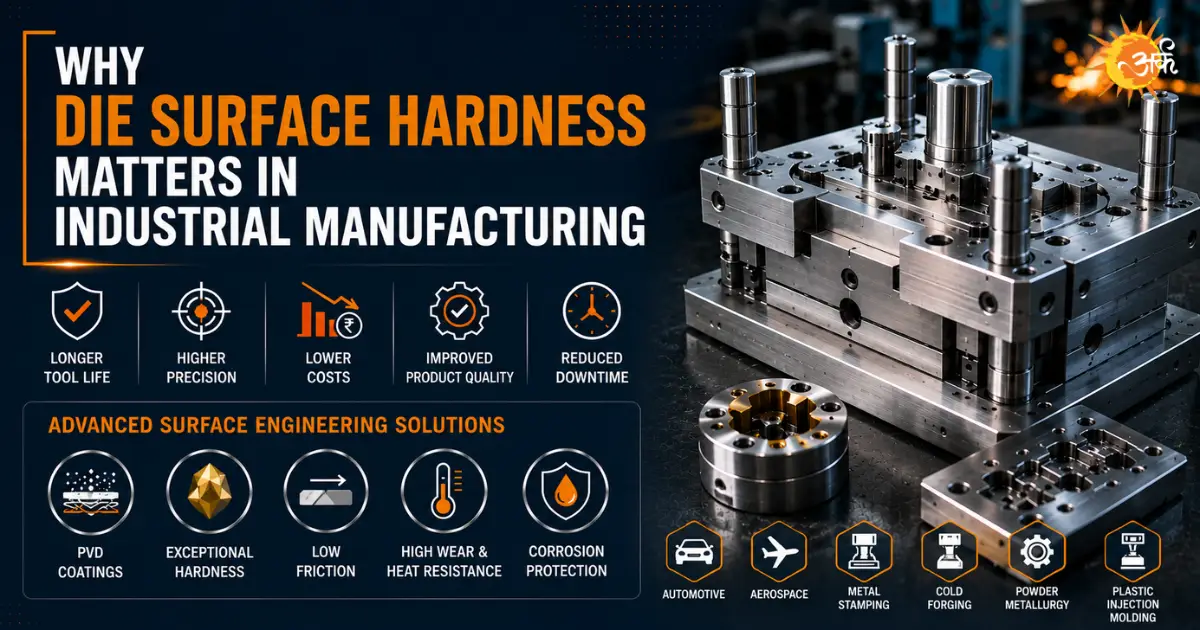
Why Die Surface Hardness Matters in Industrial Manufacturing has become a major consideration for manufacturers striving to improve productivity, product quality, and tooling lifespan. Industrial dies operate under tremendous mechanical pressure, repeated impacts, elevated temperatures, and constant friction. Without sufficient surface hardness, even premium die materials can suffer premature wear, resulting in costly downtime, inconsistent product quality, and increased maintenance expenses.
Investing in advanced surface engineering enables manufacturers to maximize die performance while reducing operational costs over the long term.
What Is Die Surface Hardness?
Die surface hardness refers to a die’s resistance to indentation, scratching, abrasion, and plastic deformation during manufacturing operations. It is commonly measured using hardness scales such as Vickers (HV), Rockwell (HRC), or Brinell (HB).
A harder die surface creates a durable protective barrier that withstands repeated contact with workpieces while maintaining dimensional accuracy throughout production.
Investing in advanced surface engineering enables manufacturers to maximize die performance while reducing operational costs over the long term.
Why Surface Hardness Is Critical in Industrial Manufacturing
Surface hardness directly influences manufacturing efficiency. Every production cycle generates friction between the die and processed material. Over thousands—or even millions—of cycles, this friction gradually removes material from the die surface.
Higher hardness provides several advantages:
- Longer tooling life
- Improved dimensional consistency
- Lower maintenance costs
- Better product surface finish
- Reduced production interruptions
These benefits collectively improve equipment utilization and overall manufacturing profitability.
Common Causes of Die Surface Failure
Wear and Abrasion
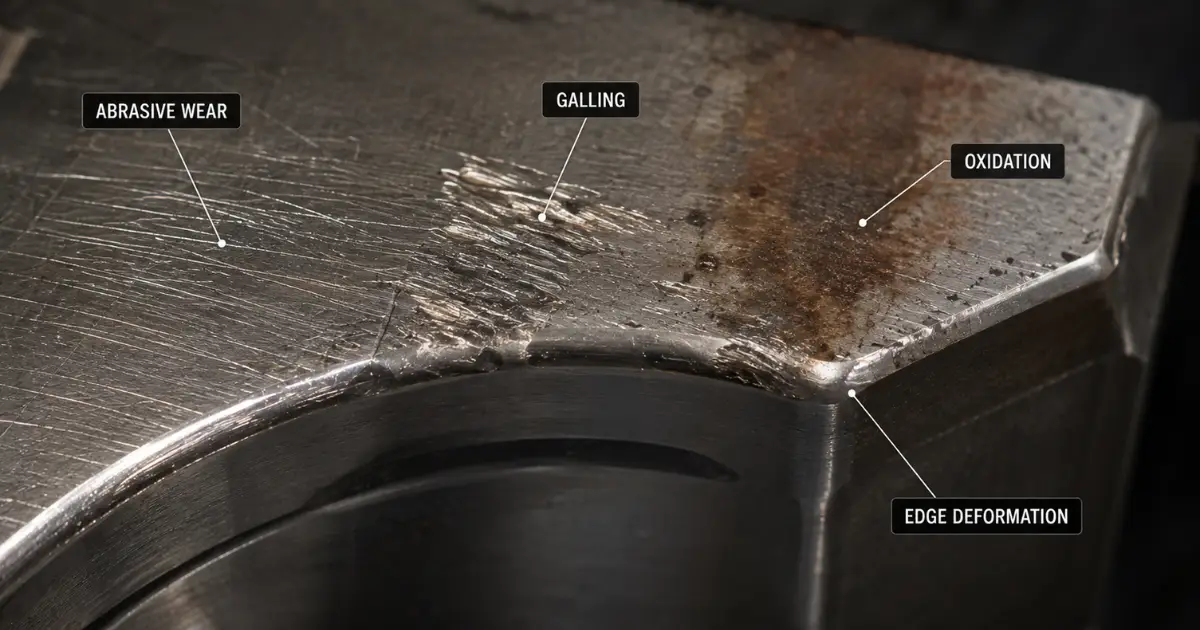
Hard particles, repeated contact, and continuous sliding gradually erode die surfaces. Abrasive wear changes tool geometry, reducing manufacturing precision and increasing scrap rates.
Galling and Adhesive Wear
When two metal surfaces slide under heavy pressure, microscopic material transfer can occur. This phenomenon, known as galling, damages both the die and the workpiece.
Manufacturers seeking how to reduce galling in forming dies can benefit from advanced low-friction surface coatings that significantly minimize metal-to-metal adhesion.
Corrosion and Oxidation
Moisture, chemicals, lubricants, and elevated temperatures can degrade die surfaces over time. Oxidation weakens protective layers and accelerates wear, especially in demanding industrial environments.
How Surface Hardness Improves Die Performance
Increasing surface hardness delivers measurable improvements throughout the production process.
A hardened surface minimizes deformation under load, maintains sharp forming edges, and reduces friction during repeated operations. This leads to improved dimensional stability, smoother finished components, and fewer tooling replacements.
Proper surface engineering also reduces lubricant dependency while improving overall manufacturing consistency.
The Role of PVD Coatings in Surface Hardness Enhancement
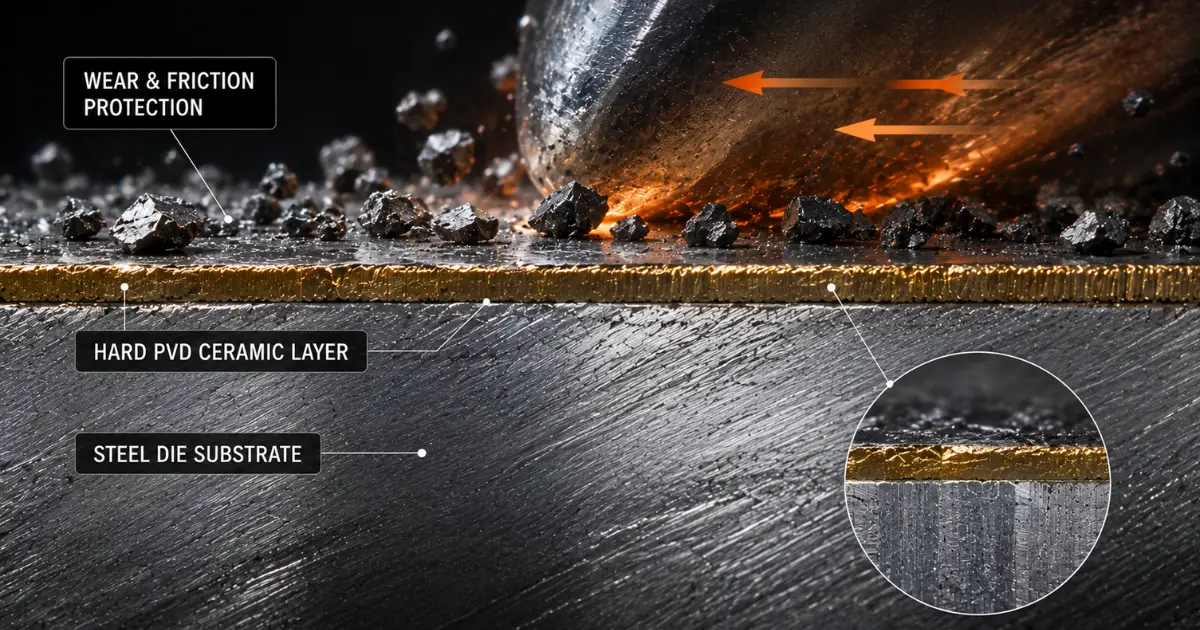
One of the most effective methods of increasing die surface hardness is Physical Vapor Deposition (PVD).
Manufacturers often ask about how PVD coating improves surface hardness because the process deposits an extremely hard, thin ceramic coating onto the die without significantly changing its dimensions.
These coatings provide:
- Exceptional hardness
- High wear resistance
- Lower coefficient of friction
- Improved oxidation resistance
- Enhanced thermal stability
Organizations looking for PVD coating services for industrial dies frequently choose this technology because it extends tooling life without requiring expensive tool redesigns.
Popular PVD Coatings for Industrial Dies
Different applications require different coating materials.
Titanium Nitride (TiN) remains one of the industry’s most widely used coatings due to its excellent wear resistance and attractive balance of hardness and toughness. Manufacturers commonly select TiN coating for improved die hardness when producing stamping, punching, and forming tools.
Other advanced coatings include:
- Titanium Aluminum Nitride (TiAlN)
- Chromium Nitride (CrN)
- Diamond-Like Carbon (DLC)
- Aluminum Chromium Nitride (AlCrN)
Each coating offers unique advantages depending on operating temperature, friction requirements, and workpiece material.
Industries That Benefit from Harder Die Surfaces
Many industries depend on superior die hardness to maintain consistent production quality.
These include:
- Automotive manufacturing
- Aerospace components
- Metal stamping
- Cold forging
- Powder metallurgy
- Plastic processing
Even surface engineering for plastic injection molds relies on optimized hardness to minimize wear, improve mold release, and maintain precision over extended production cycles.
Manufacturers seeking a deeper understanding of coating technologies can also explore surface engineering principles and industrial applications to better evaluate different hardening solutions.
Choosing the Right Surface Engineering Solution
Selecting the appropriate surface treatment depends on several factors:
- Base die material
- Production volume
- Operating temperature
- Forming pressure
- Lubrication conditions
- Desired coating hardnes
Rather than choosing the hardest available coating, manufacturers should focus on achieving the best combination of hardness, adhesion, toughness, and friction characteristics for their specific application.
Best Practices for Maintaining Die Surface Integrity
Even highly hardened dies require proper maintenance.
Recommended practices include:
- Regular inspection for wear
- Proper cleaning procedures
- Correct lubrication
- Timely recoating
- Avoiding excessive operating temperatures
- Monitoring production tolerances
Preventive maintenance helps preserve coating performance and maximizes return on tooling investment.
Conclusion
Understanding Why Die Surface Hardness Matters in Industrial Manufacturing allows manufacturers to make informed decisions that improve productivity, reduce downtime, and extend tooling life. By combining advanced surface engineering with modern PVD coatings, companies can significantly improve wear resistance, reduce galling, and achieve consistent production quality. Investing in the right surface enhancement strategy delivers long-term operational reliability and lower manufacturing costs.
Frequently Asked Questions
Higher surface hardness improves wear resistance, extends die life, maintains dimensional accuracy, and reduces production downtime.
PVD coatings increase surface hardness, reduce friction, improve oxidation resistance, and significantly extend tooling lifespan.
Contact Us
Looking to improve the performance and lifespan of your industrial dies? Our experts provide advanced surface engineering and PVD coating solutions tailored to your manufacturing requirements.
Comments are closed