


 PVD Coating
Introduction
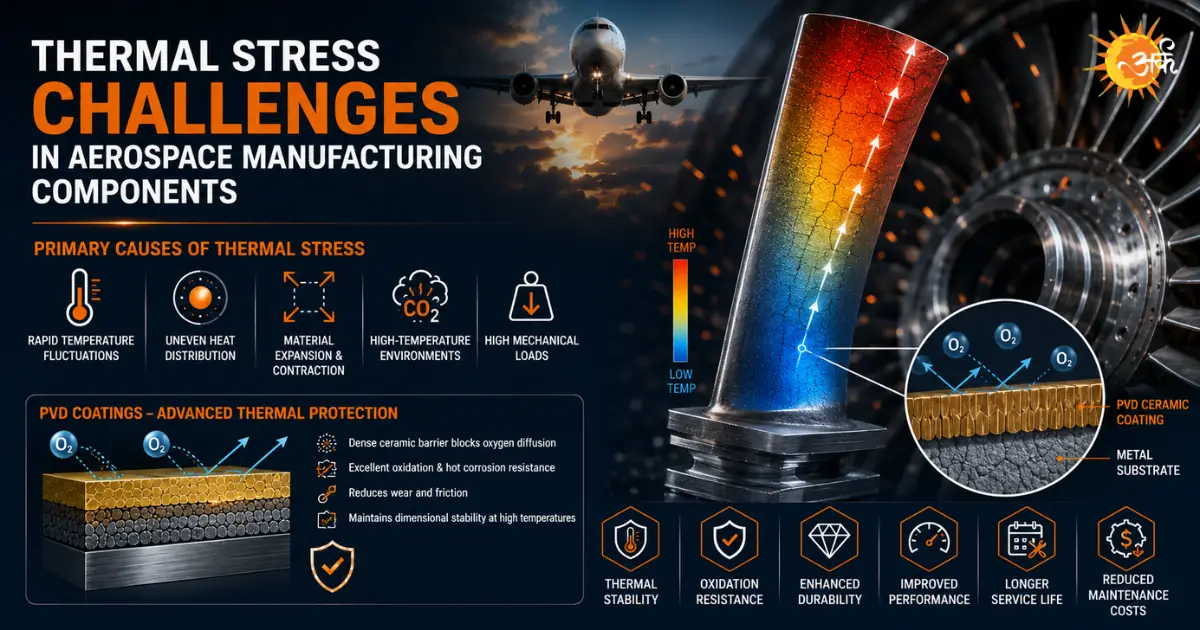
Understanding Thermal Stress Challenges in Aerospace Manufacturing Components is essential for designing reliable, long-lasting aerospace systems. Aircraft engines, turbine assemblies, exhaust systems, and structural components routinely experience rapid heating and cooling cycles while operating under extreme mechanical loads. These demanding conditions generate thermal stress that can lead to distortion, fatigue, cracking, and premature component failure. Modern aerospace manufacturers increasingly rely on advanced materials and surface engineering technologies to mitigate these risks and enhance operational reliability.
What Is Thermal Stress?
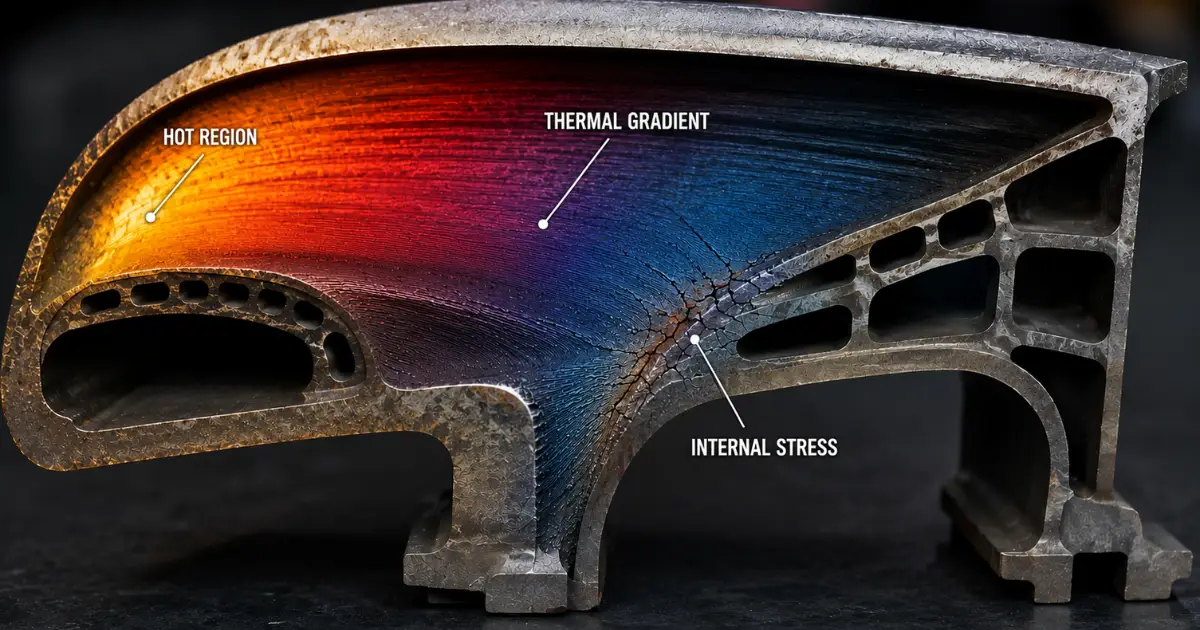
Thermal stress develops when a material expands or contracts because of temperature changes but is restricted from moving freely. As temperatures fluctuate, internal stresses build within the component.
Repeated thermal loading weakens the material over time, making it increasingly susceptible to fatigue, deformation, and fracture. In aerospace applications, where precision and reliability are paramount, controlling thermal stress is a critical engineering objective.
Why Aerospace Components Face Extreme Thermal Conditions
Aerospace components operate in environments unlike almost any other industry.
Typical operating conditions include:
- Temperatures exceeding 1,000°C in turbine sections
- Rapid heating during engine startup
- Continuous exposure to combustion gases
- High-speed airflow
- Cyclic loading during takeoff, flight, and landing
These factors expose components to repeated thermal expansion and contraction throughout their service life.
Primary Causes of Thermal Stress
Rapid Temperature Fluctuations
Engine components frequently transition from ambient temperatures to extremely high operating temperatures within minutes. Such abrupt thermal changes generate significant internal stresses.
Uneven Heat Distribution
Not every part of a component heats uniformly. Temperature gradients create localized expansion, causing internal strain between hotter and cooler regions.
Material Expansion and Contraction
Every engineering material has a coefficient of thermal expansion. Differences in expansion rates between adjoining materials or coatings can produce concentrated stresses at their interfaces.
High Mechanical Loads
Thermal stress often combines with mechanical loading from pressure, vibration, and centrifugal forces. This combination accelerates material degradation and shortens component lifespan.
How Thermal Stress Affects Aerospace Components
Unchecked thermal stress can significantly reduce component reliability.
Common consequences include:
- Thermal fatigue cracking
- Surface distortion
- Reduced dimensional accuracy
- Lower fatigue life
- Coating delamination
- Unexpected component failure
- Increased maintenance costs
Even microscopic cracks can propagate under cyclic loading, ultimately compromising mission-critical aerospace systems.
Materials Commonly Used in Aerospace Applications
Modern aerospace manufacturing relies on advanced materials capable of maintaining strength at elevated temperatures.
Common materials include:
- Nickel-based superalloys
- Titanium alloys
- Stainless steels
- Cobalt-based alloys
- Ceramic matrix composites
Although these materials offer exceptional heat resistance, they still require additional surface protection in severe operating environments.
Thermal Fatigue vs. Thermal Stress
Although closely related, thermal stress and thermal fatigue are not identical.
Thermal stress refers to the internal stress generated by temperature changes. Thermal fatigue is the cumulative damage that develops after repeated thermal stress cycles.
Over time, thermal fatigue causes microscopic cracks that gradually grow into structural failures. Understanding the science behind thermal stress and fatigue in aerospace materials helps engineers develop effective strategies for improving component longevity.
The Role of Surface Engineering in Thermal Protection
Surface engineering has become an indispensable solution for extending the life of aerospace components exposed to extreme temperatures.
Instead of replacing expensive base materials, manufacturers enhance surface properties with advanced coatings that improve hardness, oxidation resistance, wear resistance, and thermal stability.
Many aerospace manufacturers depend on industrial coatings for extreme operating conditions to protect critical components from the combined effects of heat, friction, oxidation, and mechanical loading.
How PVD Coatings Improve Component Performance
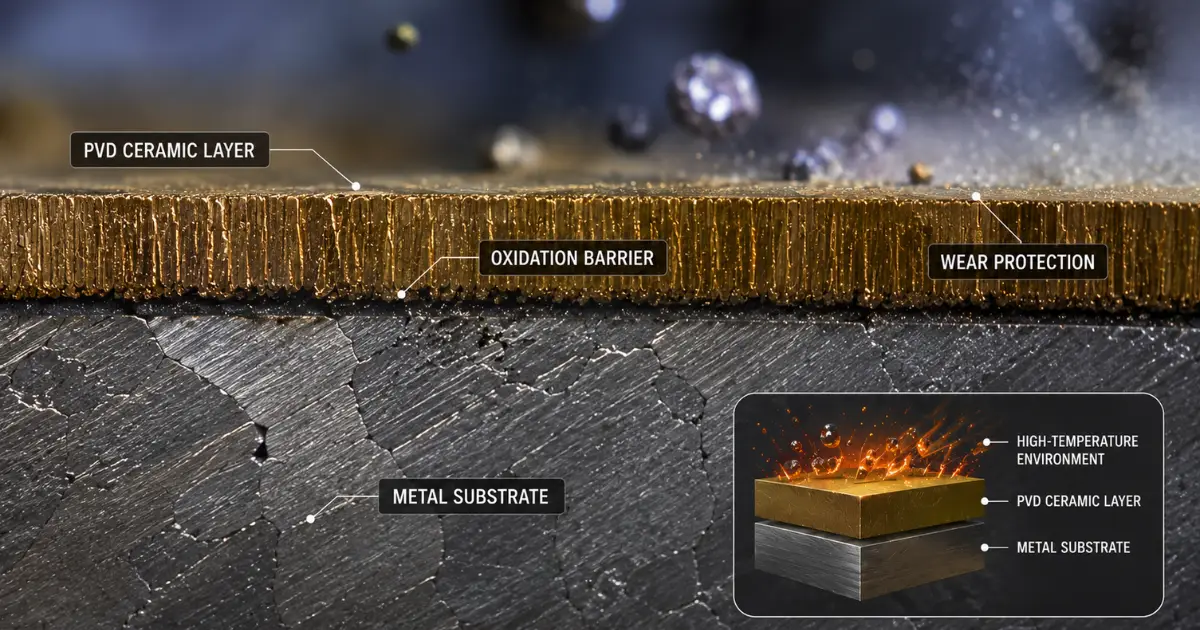
Physical Vapor Deposition (PVD) coatings provide a dense ceramic barrier that protects components against thermal degradation.
Understanding how the PVD coating process enhances component performance reveals why this technology is widely used across aerospace manufacturing. PVD coatings reduce wear, improve oxidation resistance, minimize friction, and help maintain dimensional stability under elevated temperatures.
Today’s high-temperature PVD coating solutions are specifically engineered to withstand demanding aerospace environments while preserving component integrity over extended service cycles.
Selecting the Right PVD Coating for High-Temperature Applications
Choosing an appropriate coating depends on operating temperature, substrate material, load conditions, and expected service life.
For applications exposed to severe thermal cycling, TiSiN coating for high-temperature applications offers excellent hardness retention, oxidation resistance, and thermal stability.
Engineers evaluating surface treatments should also consider choosing the right PVD coating for demanding applications by balancing hardness, adhesion, toughness, and heat resistance rather than focusing on a single performance characteristic.
Best Practices for Minimizing Thermal Stress
Reducing thermal stress requires a comprehensive engineering approach.
Recommended practices include:
- Selecting heat-resistant materials
- Applying advanced PVD coatings
- Optimizing cooling system design
- Minimizing thermal gradients
- Conducting routine inspections
- Monitoring operating temperatures
- Recoating components when necessary
Preventive maintenance combined with advanced surface engineering significantly improves operational reliability.
Future Trends in Aerospace Surface Engineering
Emerging aerospace technologies continue to push operating temperatures higher, increasing the demand for more advanced protective coatings.
Future developments are expected to include:
- Nanostructured ceramic coatings
- Multi-layer PVD coating architectures
- AI-assisted coating optimization
- Advanced hybrid surface engineering technologies
- Improved environmentally sustainable coating processes
These innovations will further enhance component durability while supporting next-generation aerospace performance requirements.
Conclusion
Addressing Thermal Stress Challenges in Aerospace Manufacturing Components is essential for improving safety, reliability, and operational efficiency. Extreme temperature fluctuations, mechanical loading, and thermal fatigue place enormous demands on aerospace materials, making advanced surface engineering a critical part of modern manufacturing. By combining optimized materials with high-performance PVD coatings, manufacturers can reduce thermal damage, extend component lifespan, and maintain consistent performance in the most demanding aerospace environments.
Frequently Asked Questions
Thermal stress occurs when rapid temperature changes cause materials to expand or contract unevenly while being mechanically constrained.
PVD coatings improve surface hardness, reduce oxidation, lower friction, and provide a protective barrier that enhances high-temperature performance.
TiSiN coatings offer exceptional thermal stability, oxidation resistance, and hardness retention, making them ideal for components exposed to extreme temperatures.
No. However, careful material selection, optimized component design, advanced surface engineering, and proper maintenance can significantly reduce its impact.
Contact Us
Looking for advanced surface engineering solutions to protect aerospace components from thermal stress and high-temperature wear? Our experts provide customized PVD coating solutions designed to improve durability, reliability, and long-term performance.
Comments are closed