


 PVD Coating
Introduction
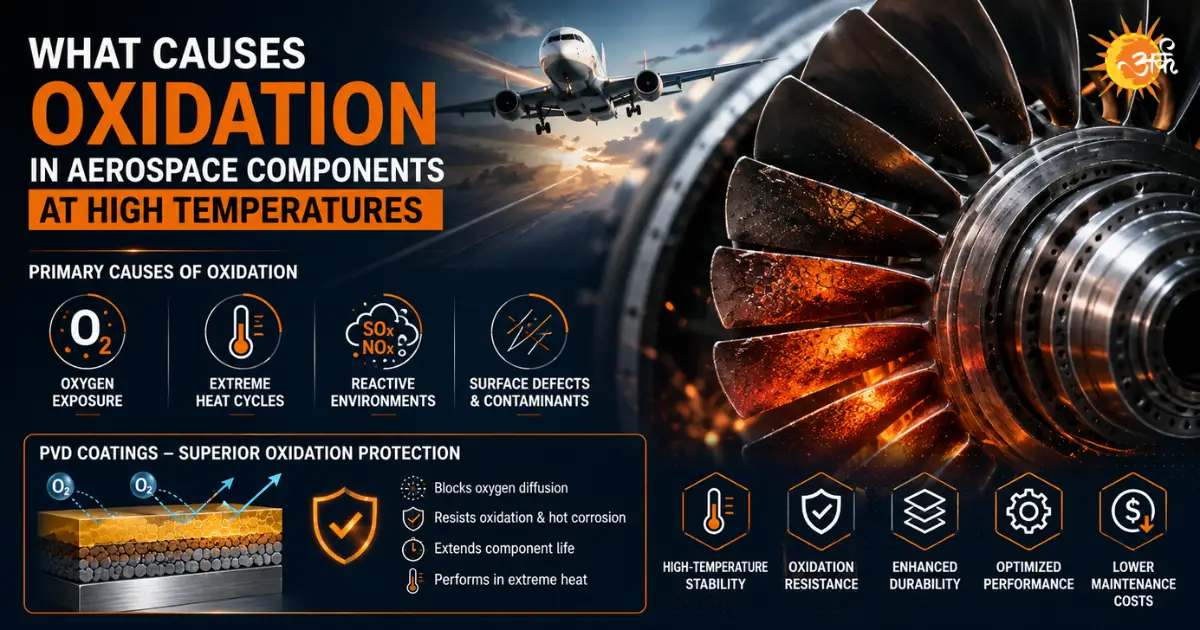
Understanding What Causes Oxidation in Aerospace Components at High Temperatures is essential for manufacturers and aerospace engineers striving to improve component reliability, safety, and service life. Turbine blades, engine parts, exhaust systems, and structural components routinely operate in environments where temperatures exceed several hundred degrees Celsius. Under these extreme conditions, oxidation becomes one of the leading causes of material degradation, reducing performance and increasing maintenance costs. Fortunately, modern surface engineering technologies offer effective solutions to combat this persistent challenge.
Understanding High-Temperature Oxidation
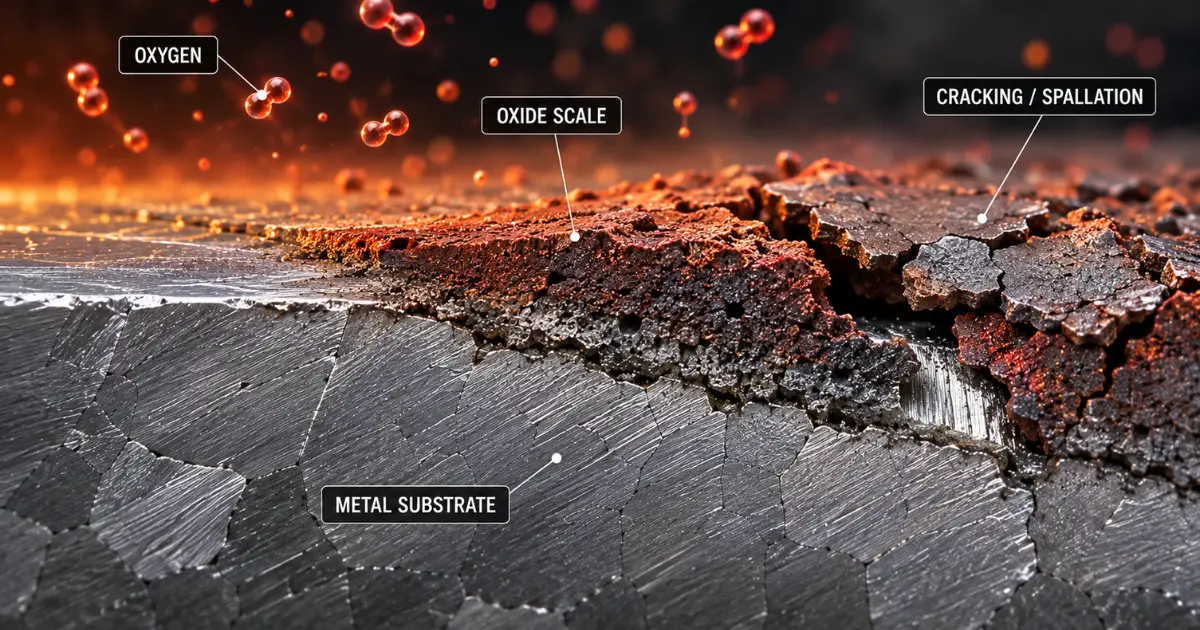
Oxidation is a chemical reaction between a material and oxygen. At elevated temperatures, this reaction accelerates dramatically, causing oxide layers to form on component surfaces.
While a thin oxide layer may provide limited protection on certain alloys, prolonged exposure often leads to scale formation, cracking, material loss, and reduced mechanical strength. The higher the operating temperature, the faster oxidation progresses.
Why Aerospace Components Are Vulnerable
Aerospace components experience some of the harshest operating conditions in engineering.
During flight, engine and turbine components are subjected to:
- Continuous high temperatures
- Rapid thermal cycling
- High-pressure airflow
- Mechanical loading
- Oxidizing combustion gases
These combined stresses create an aggressive environment where even advanced alloys require additional surface protection.
Primary Causes of Oxidation at Elevated Temperatures
Oxygen Exposure
The most fundamental cause of oxidation is prolonged exposure to oxygen. At elevated temperatures, oxygen atoms diffuse rapidly into metallic surfaces, reacting with alloying elements to form oxide scales.
Extreme Heat Cycles
Aircraft engines repeatedly transition between ambient temperatures and extreme operating conditions. These thermal cycles expand and contract protective oxide layers, eventually causing them to crack or spall away, exposing fresh metal beneath.
Reactive Environments
Combustion gases often contain moisture, sulfur compounds, nitrogen oxides, and other reactive species. These contaminants accelerate oxidation and may also contribute to hot corrosion.
Surface Defects and Contaminants
Microscopic scratches, machining marks, and surface contamination become initiation sites for oxidation. Proper surface preparation is therefore critical before applying protective coatings.
How Oxidation Affects Aerospace Performance
Unchecked oxidation gradually weakens aerospace components and compromises operational efficiency.
Its consequences include:
- Material loss
- Reduced fatigue strength
- Surface cracking
- Lower thermal efficiency
- Increased maintenance intervals
- Higher replacement costs
For precision-engineered aerospace systems, even minor surface degradation can affect dimensional accuracy and long-term reliability.
Materials Most Susceptible to High-Temperature Oxidation
Although aerospace alloys are engineered for exceptional performance, they are not immune to oxidation.
Materials commonly affected include:
- Tool steels
- Nickel-based superalloys
- Titanium alloys
- Stainless steels
- Cobalt alloys
Each material develops different oxide scales depending on its chemical composition and operating temperature.
The Role of Advanced Surface Engineering
Surface engineering has become an indispensable strategy for protecting aerospace components operating in severe thermal environments.
Rather than replacing expensive base materials, manufacturers enhance surface properties using advanced coating technologies that improve hardness, reduce friction, and significantly increase oxidation resistance.
Manufacturers seeking long-term durability often rely on industrial coatings for extreme environments to protect mission-critical aerospace components exposed to intense heat and corrosive conditions.
For a broader scientific perspective, research on high-temperature oxidation of engineering materials explains the oxidation mechanisms that influence coating selection and material performance.
How PVD Coatings Improve Oxidation Resistance
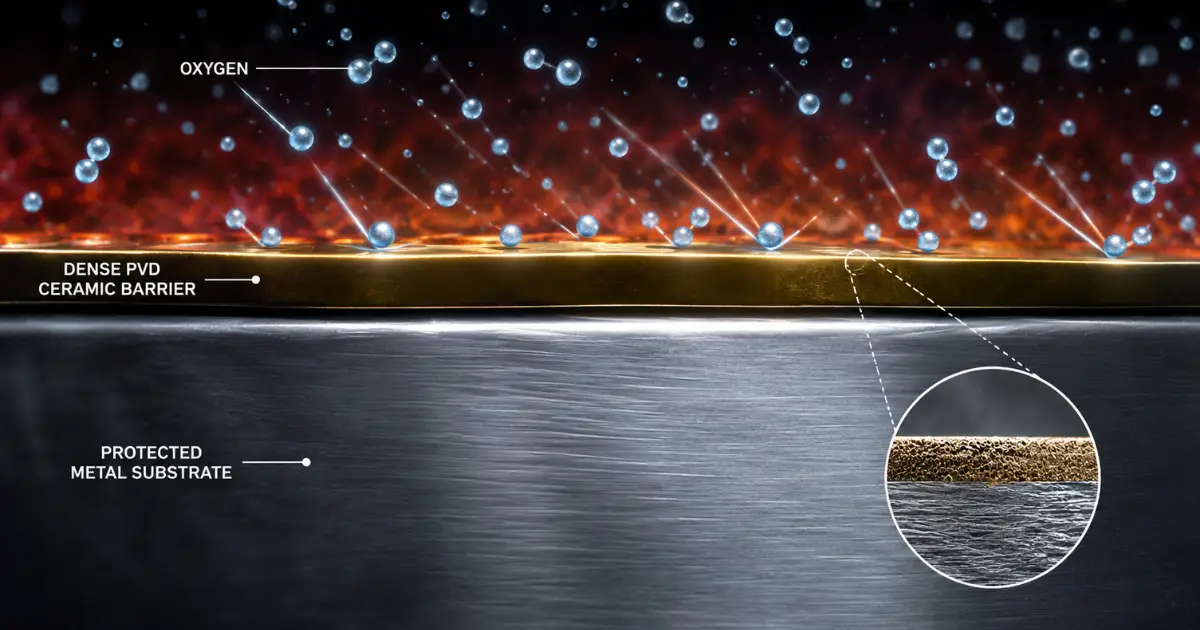
Physical Vapor Deposition (PVD) coatings form dense, adherent ceramic layers that shield the substrate from oxygen diffusion.
Understanding how the PVD coating process improves oxidation resistance helps explain why these coatings are widely adopted across aerospace manufacturing. By acting as a diffusion barrier, PVD coatings slow oxidation while maintaining dimensional precision.
Today’s high-temperature PVD coating solutions are specifically designed to withstand demanding aerospace operating conditions without compromising component performance
Choosing the Right High-Temperature Coating
Selecting the appropriate coating depends on operating temperature, oxidation resistance requirements, and mechanical loading.
For example, engineers often perform an AlTiN vs TiSiN vs TiN coating comparison before selecting a coating for aerospace tooling or engine components.
Among these options, TiSiN coating for extreme heat applications offers exceptional thermal stability and oxidation resistance, making it particularly suitable for environments where conventional coatings may degrade.
The optimal solution balances hardness, adhesion, thermal stability, and resistance to oxidation throughout the component’s service life.
Best Practices for Preventing Oxidation
Preventing oxidation requires more than selecting the right coating.
Manufacturers should also:
- Choose oxidation-resistant alloys
- Apply high-performance PVD coatings
- Ensure proper surface preparation
- Minimize surface contamination
- Conduct routine inspections
- Monitor operating temperatures
- Recoat components when necessary
A comprehensive maintenance strategy significantly extends component lifespan while improving operational reliability.
Conclusion
Understanding What Causes Oxidation in Aerospace Components at High Temperatures enables manufacturers to make informed decisions about material selection, coating technologies, and preventive maintenance. As aerospace systems continue to operate under increasingly demanding conditions, advanced PVD coatings and modern surface engineering play a vital role in minimizing oxidation, preserving component integrity, and extending service life. Investing in proven oxidation-resistant solutions ultimately improves safety, efficiency, and long-term operational performance.
Frequently Asked Questions
Oxidation occurs when metals react with oxygen at elevated temperatures. High heat accelerates this reaction, causing protective oxide layers to grow and eventually degrade the material.
It reduces component strength, causes material loss, lowers efficiency, and shortens the service life of critical engine and structural parts.
PVD coatings create a dense ceramic barrier that limits oxygen diffusion, improving wear resistance and protecting the underlying material from oxidation.
The best choice depends on the application. TiSiN, AlTiN, and TiN each offer different advantages, with TiSiN often preferred for extreme heat applications due to its excellent thermal stability.
Complete prevention is difficult in high-temperature environments, but proper material selection, advanced coatings, and regular maintenance can significantly reduce oxidation and extend component life.
Contact Us
Need reliable surface engineering solutions for aerospace components operating in extreme temperatures? Our experts provide advanced PVD coating technologies tailored to improve oxidation resistance, durability, and long-term performance.
Comments are closed