


 PVD Coating
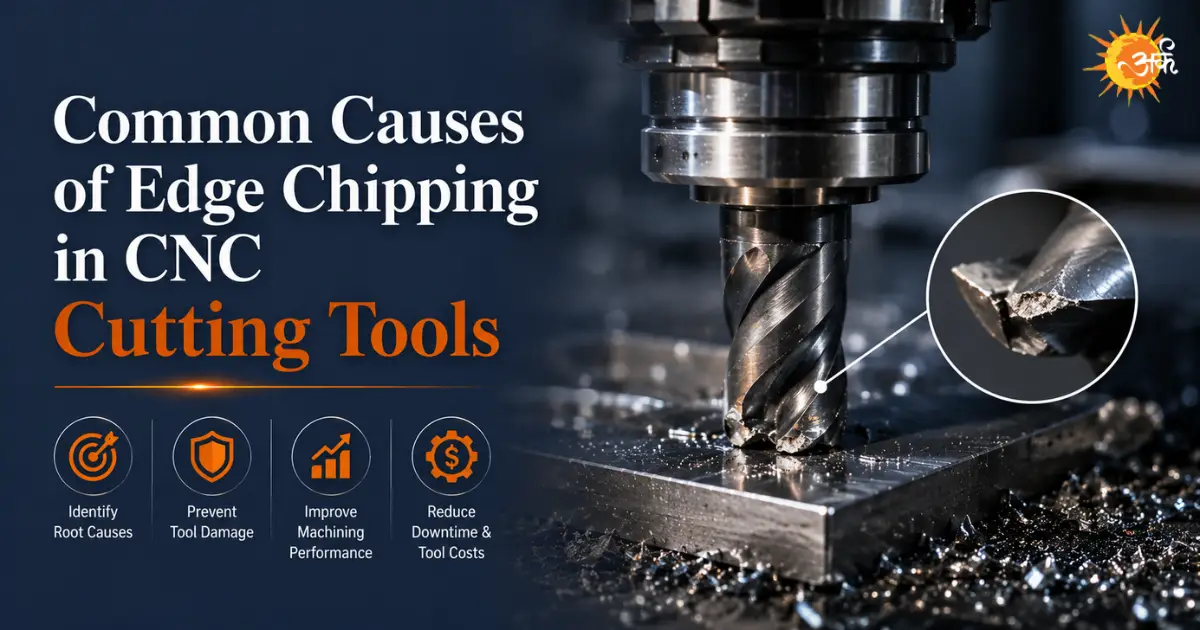
Common Causes of Edge Chipping in CNC Cutting Tools
Modern manufacturing environments demand extraordinary precision, speed, and durability. However, one persistent issue continues to disrupt machining efficiency — Common Causes of Edge Chipping in CNC Cutting Tools. Edge chipping not only damages expensive tooling but also compromises dimensional accuracy, surface finish quality, and overall production stability. In high-performance CNC operations, even microscopic fractures along the cutting edge can escalate into catastrophic tool failure.
Understanding the underlying causes of edge chipping is essential for manufacturers seeking higher productivity, reduced downtime, and improved machining consistency.
Understanding What Edge Chipping Means
Edge chipping refers to the small fractures or breakages that occur along the cutting edge of a CNC tool during machining operations. Unlike gradual wear, chipping appears suddenly and often propagates rapidly under aggressive cutting conditions.
The phenomenon typically occurs when mechanical stress exceeds the structural integrity of the cutting edge. This can result in:
- irregular cutting performance
- dimensional inaccuracies
- rough surface finishes
- increased vibration during machining
Even minor edge fractures can severely diminish machining stability.
Why Edge Chipping Is a Serious Manufacturing Problem
Edge chipping creates a domino effect across the production process. A compromised cutting edge generates inconsistent chip formation, elevated cutting forces, and excessive heat accumulation.
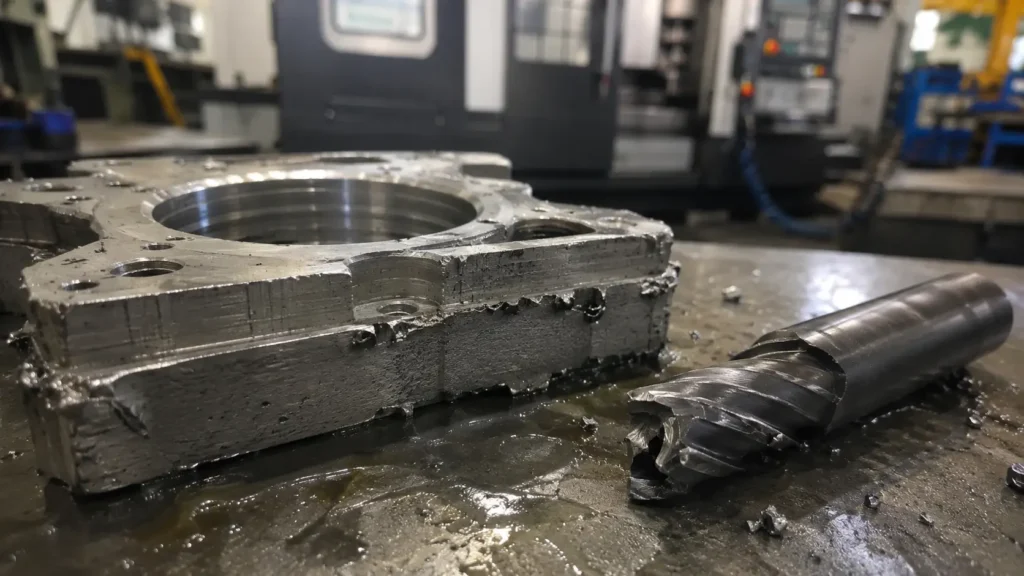
Consequently, manufacturers experience:
- premature tool replacement
- higher operational costs
- reduced machining precision
- increased machine downtime
In high-volume production facilities, these losses become economically substantial.
Many industries now rely on advanced CNC machining solutions to reduce these operational inefficiencies and improve machining reliability.
Excessive Cutting Speeds and Thermal Stress
High-speed machining generates immense thermal energy at the cutting interface. When the cutting edge experiences rapid heating and cooling cycles, thermal fatigue develops within the tool material.
This repeated expansion and contraction weakens the cutting edge and eventually causes micro-fractures.
Thermal stress becomes even more severe when machining hardened alloys, stainless steel, or heat-resistant superalloys. Applying a high-temperature resistant coating can significantly improve thermal stability and reduce oxidation-related edge damage.
Proper spindle speed optimization remains essential for maintaining tool integrity.
Improper Feed Rates and Tool Pressure
Feed rates directly influence cutting force distribution. Excessively aggressive feed rates impose abnormal mechanical pressure on the cutting edge.
As cutting resistance increases, localized stress concentrations form near the edge radius. Eventually, brittle fractures begin to appear.
Conversely, feed rates that are too low may cause rubbing instead of cutting. This increases frictional heat and accelerates edge degradation.
Balancing cutting parameters is therefore indispensable for machining longevity.
Poor Tool Material Selection
Every machining application requires a specific balance of toughness, hardness, and thermal resistance. Selecting an unsuitable tool substrate frequently leads to premature edge failure.
For example:
- brittle tool materials may crack under interrupted cuts
- softer materials may deform under high temperatures
- low-toughness carbides often fail during heavy machining
Choosing the appropriate carbide grade or substrate composition helps improve edge resilience under demanding machining conditions.
Inadequate Cooling and Lubrication
Insufficient coolant delivery is one of the most overlooked causes of edge chipping. Excessive heat accumulation increases oxidation, softening, and thermal cracking along the cutting edge.
Proper lubrication helps:
- reduce friction
- stabilize cutting temperatures
- improve chip evacuation
- minimize thermal shock
Advanced cooling strategies such as through-tool coolant systems are increasingly utilized in precision CNC machining environments.
Machine Vibration and Lack of Stability
Machine instability creates fluctuating cutting forces that repeatedly impact the cutting edge. Over time, these repetitive shock loads initiate microscopic fractures.
Common sources of vibration include:
- spindle imbalance
- poor workholding
- excessive tool overhang
- worn machine components
Vibration-induced chipping is especially prevalent in high-speed machining applications where stability margins are narrow.
Reducing harmonic resonance significantly enhances tool life and machining precision.
Workpiece Hardness and Material Inconsistency
Inconsistent workpiece hardness creates unpredictable cutting conditions. Certain regions may impose substantially higher cutting loads on the tool edge.
This irregular stress distribution accelerates edge fatigue and fracture propagation.
Hard inclusions, scale formation, and material impurities further intensify the problem. Machining hardened steels or exotic alloys requires highly durable tooling systems capable of withstanding abrasive wear.
Implementing a wear-resistant coating for cutting tools helps improve resistance against severe abrasion and mechanical stress.
Improper Tool Geometry and Edge Preparation
Tool geometry plays a critical role in stress distribution during cutting operations. Improper rake angles, clearance angles, or edge hone preparation may weaken the cutting edge.
Sharp edges often provide superior cutting efficiency but may lack sufficient toughness for interrupted cuts. Meanwhile, excessively honed edges may increase cutting forces unnecessarily.
Optimized edge preparation helps balance:
- sharpness
- strength
- chip evacuation
- thermal resistance
Precision-engineered tool geometries are essential for reducing chipping susceptibility.
The Impact of Built-Up Edge Formation
Built-up edge occurs when workpiece material adheres to the cutting edge during machining. As this material accumulates and breaks away intermittently, it subjects the cutting edge to repeated shock loading.
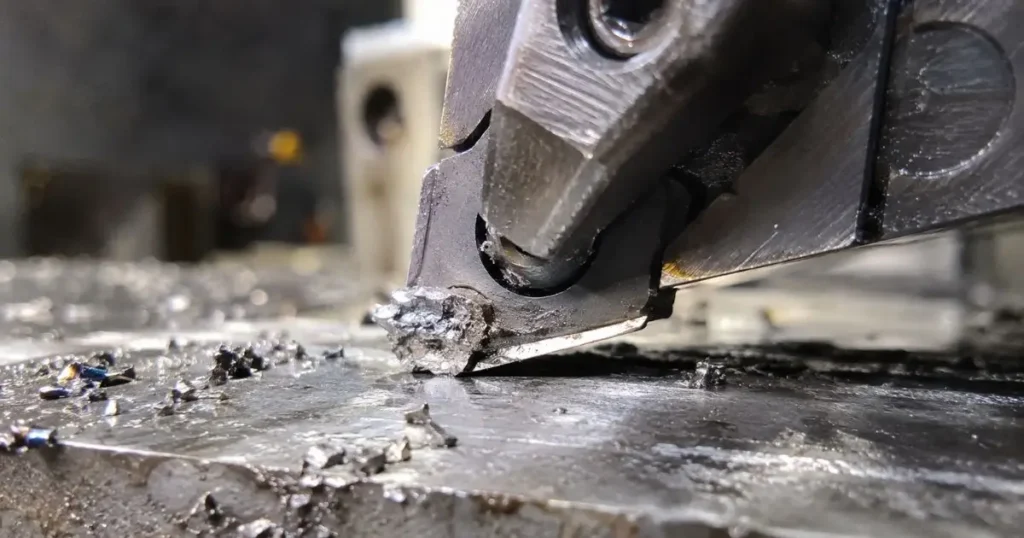
This unstable cutting behavior often leads to:
- micro-fractures
- surface irregularities
- inconsistent cutting performance
Maintaining proper cutting speeds and lubrication helps minimize built-up edge formation during machining operations.
Importance of Coating Selection in CNC Tools
Coating technology plays a decisive role in preventing edge chipping. Modern PVD coatings improve:
- hardness
- thermal resistance
- oxidation resistance
- surface lubricity
Selecting the proper coating depends on the machining environment, workpiece material, and cutting conditions.
A durable surface protection coating helps reduce frictional wear while protecting the cutting edge from excessive heat and abrasion.
Manufacturers focused on extending cutting tool life increasingly adopt advanced multilayer coatings for superior machining stability.
Understanding and choosing the right coating for CNC tools is vital for maximizing productivity and minimizing operational losses.
Preventive Measures to Reduce Edge Chipping
Reducing edge chipping requires a comprehensive machining strategy that combines tooling optimization with process stability.
Key preventive measures include:
- optimizing cutting parameters
- improving machine rigidity
- selecting proper tool geometry
- using advanced coatings
- ensuring efficient coolant delivery
- minimizing vibration
Predictive maintenance and process monitoring also help identify early signs of tool degradation before catastrophic failure occurs.
How Surface Engineering Enhances Tool Durability
Modern surface engineering technologies significantly improve the performance of CNC cutting tools. Advanced coatings create a protective barrier against:
- thermal degradation
- oxidation
- frictional wear
- abrasive contact
These engineered surfaces enable tools to operate under extreme machining conditions while maintaining structural stability.
As machining environments become increasingly aggressive, surface engineering continues to evolve as a critical pillar of manufacturing efficiency.
Conclusion
Understanding the Common Causes of Edge Chipping in CNC Cutting Tools is essential for achieving stable machining performance, reducing tooling expenses, and improving manufacturing productivity. Factors such as excessive heat, vibration, poor cooling, improper tool geometry, and inadequate coating selection all contribute to premature edge failure.
By optimizing machining parameters, improving machine stability, and implementing advanced coating technologies, manufacturers can significantly reduce edge chipping and enhance operational efficiency. Modern surface engineering solutions continue to play a vital role in extending tool durability and supporting high-performance CNC machining environments.
FAQs
Edge chipping refers to small fractures or breakages along the cutting edge of a machining tool caused by excessive mechanical or thermal stress.
Common causes include high cutting speeds, improper feed rates, machine vibration, insufficient cooling, and poor tool material selection.
Advanced coatings improve hardness, thermal resistance, and wear protection, helping tools withstand aggressive machining conditions.
Vibration creates fluctuating cutting forces that repeatedly stress the cutting edge, eventually causing fractures and instability.
Industries such as automotive, aerospace, mold manufacturing, heavy engineering, and precision machining frequently encounter edge chipping challenges.
Looking for advanced coating solutions to improve CNC tool performance and reduce edge chipping? Connect with our experts today to find the right surface engineering solution for your machining applications.
Comments are closed