


 PVD Coating
Modern manufacturing facilities increasingly rely on aggressive machining parameters to maximize productivity and production throughput. However, Why Cutting Tools Fail Prematurely in High-Speed Machining remains one of the most persistent challenges in precision engineering environments. Elevated cutting temperatures, mechanical stress concentrations, frictional deterioration, and inadequate surface protection collectively accelerate tool degradation long before the expected service life is achieved.
Premature tool failure not only increases operational costs but also disrupts machining accuracy, surface finish consistency, and overall manufacturing efficiency.
Understanding High-Speed Machining Conditions
High-speed machining operates under exceptionally demanding conditions. Cutting tools are exposed to:
- elevated spindle speeds
- extreme thermal loads
- rapid chip evacuation
- intensified cutting pressure
These harsh operational environments create a complex tribological interaction between the tool and workpiece material.
As cutting velocities increase, heat generation rises exponentially. Simultaneously, mechanical shock and abrasive wear intensify. Without appropriate protection mechanisms, cutting tools deteriorate rapidly.
The Relationship Between Heat and Tool Degradation
Heat is one of the primary contributors to premature cutting tool failure. During high-speed machining, temperatures at the cutting zone may exceed several hundred degrees Celsius.
This thermal accumulation weakens the cutting edge through:
- thermal softening
- oxidation
- diffusion wear
- microstructural instability
Over time, the tool loses dimensional integrity and cutting precision. Manufacturers frequently implement surface protection under extreme heat and stress to improve thermal resistance and stabilize machining performance.
Managing heat effectively remains essential for sustainable high-speed machining operations.
Excessive Cutting Speeds and Thermal Fatigue
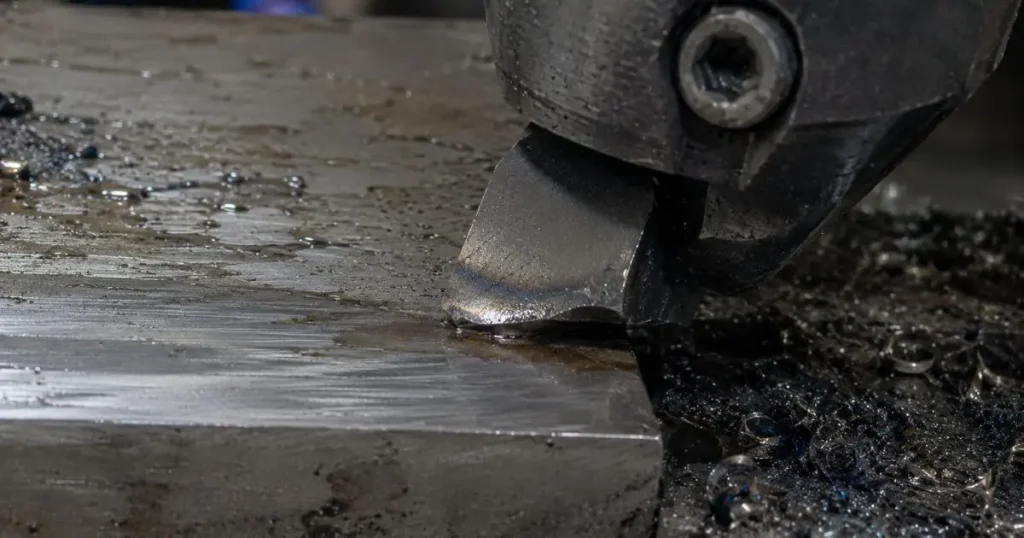
Excessively high spindle speeds create repeated heating and cooling cycles across the cutting edge. This phenomenon generates thermal fatigue within the substrate material.
Microscopic cracks begin forming near the cutting edge and progressively propagate during machining operations. Eventually, catastrophic edge failure occurs.
Thermal fatigue is particularly severe when machining:
- hardened steel
- titanium alloys
- nickel-based superalloys
- abrasive composite materials
Using an oxidation-resistant coating for high-speed applications helps reduce heat-related surface degradation and improves cutting stability under elevated temperatures.
Impact of Friction on Cutting Tool Performance
Frictional interaction between the tool and workpiece substantially influences machining efficiency. Elevated friction levels increase:
- heat generation
- adhesive wear
- cutting resistance
- energy consumption
As friction intensifies, the cutting edge experiences accelerated deterioration.
Poor chip evacuation further exacerbates the issue by trapping heat near the cutting interface. Over time, this leads to edge chipping, built-up edge formation, and unstable machining behavior.
Advanced lubrication strategies and optimized tool surfaces help mitigate these tribological complications.
Mechanical Stress and Edge Breakdown
High-speed machining subjects cutting tools to enormous mechanical stress. Interrupted cuts, fluctuating cutting loads, and inconsistent material hardness create repeated impact forces along the cutting edge.
These stress concentrations eventually cause:
- micro-fractures
- edge chipping
- brittle failure
- premature fracture propagation
Inadequate rigidity within the machining system further intensifies mechanical instability.
Proper tool geometry and machine stability are indispensable for maintaining cutting edge integrity during aggressive machining operations.
Improper Tool Material Selection
Not all cutting tool materials are designed for extreme machining conditions. Selecting the wrong substrate often leads to rapid tool deterioration.
For example:
- low-toughness carbides may fracture under impact
- insufficient hardness increases abrasive wear
- poor thermal resistance accelerates oxidation
Manufacturers increasingly adopt specialized carbide grades and ceramic materials engineered for high-temperature machining environments.
Combining optimized substrates with Industrial wear protection solutions significantly enhances tool reliability under severe production conditions.
Poor Cooling and Lubrication Practices
Insufficient cooling remains a major contributor to premature tool failure. Without proper coolant delivery, excessive thermal accumulation destabilizes the cutting edge.
Effective cooling systems help:
- reduce thermal stress
- stabilize cutting temperatures
- improve chip evacuation
- minimize oxidation
Modern machining facilities increasingly utilize:
- through-tool coolant systems
- minimum quantity lubrication
- cryogenic cooling techniques
These advanced cooling strategies improve operational efficiency while extending tool lifespan.
Oxidation and Surface Degradation in High-Speed Operations
Oxidation occurs when elevated temperatures react chemically with the cutting tool surface. This reaction weakens the protective surface layer and accelerates wear mechanisms.
Oxidized surfaces become more susceptible to:
- abrasive wear
- diffusion damage
- thermal cracking
- adhesion failure
To combat these issues, manufacturers rely on advanced thin film coating technology designed to improve thermal resistance and reduce oxidation at elevated machining temperatures.
Surface engineering technologies continue to evolve rapidly in response to modern machining demands.
Vibration and Machine Instability Issues
Machine vibration introduces dynamic instability into the machining process. Even minor oscillations generate fluctuating cutting forces that repeatedly impact the cutting edge.
This repetitive stress accelerates:
- fatigue cracking
- edge breakdown
- surface irregularities
- tool instability
Common causes of vibration include:
- spindle imbalance
- poor fixturing
- excessive tool overhang
- worn machine components
Maintaining machine rigidity and process stability is critical for reducing premature tool failure.
The Role of Coatings in High-Speed Machining
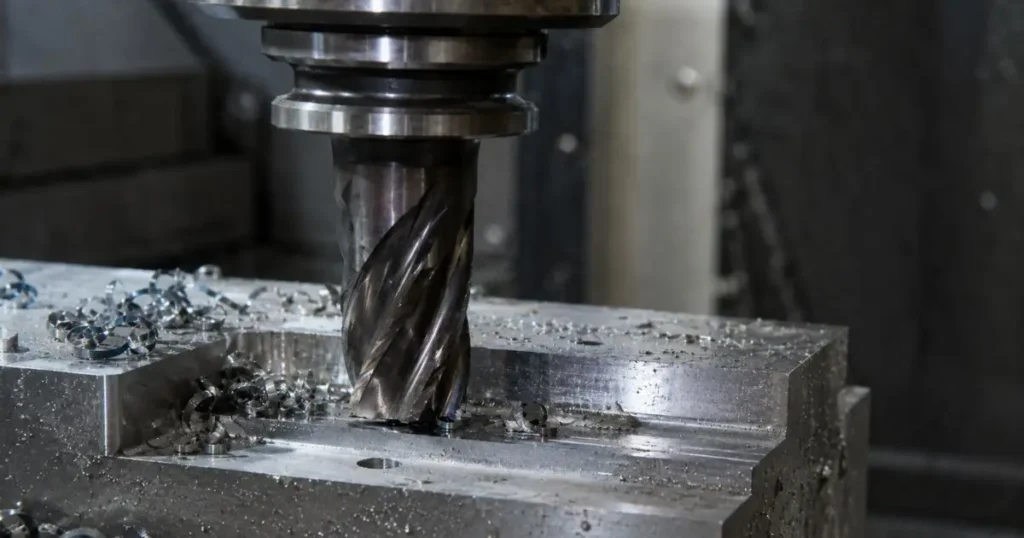
Coating technology plays a pivotal role in protecting cutting tools against aggressive machining environments. Modern PVD coatings improve:
- hardness
- oxidation resistance
- thermal stability
- surface lubricity
These engineered surfaces reduce direct contact between the tool and workpiece, minimizing wear and friction.
Manufacturers focused on improving durability of industrial tooling increasingly rely on multilayer coating architectures for enhanced machining performance.
Advanced coatings also improve chip flow characteristics and reduce adhesion-related damage during high-speed cutting operations.
Strategies for Extending Tool Life
Reducing premature tool failure requires a comprehensive machining strategy that integrates:
- optimized cutting parameters
- proper cooling systems
- advanced coatings
- machine stability improvements
- precision tool geometry
Preventive maintenance and real-time process monitoring further help identify early signs of wear before catastrophic failure occurs.
Many manufacturers now prioritize reducing tool failure in high-speed production to improve productivity and minimize operational downtime.
Importance of Surface Engineering Technologies
Surface engineering has become an indispensable component of modern manufacturing. Advanced coatings and engineered surface treatments create protective barriers against:
- thermal degradation
- frictional wear
- oxidation
- mechanical stress
These technologies enable cutting tools to operate under increasingly aggressive machining conditions while maintaining structural integrity and dimensional precision.
As industrial machining evolves, surface engineering will continue driving improvements in productivity, efficiency, and tooling longevity.
Future Trends in Tool Protection and Performance
Emerging manufacturing technologies are reshaping the future of cutting tool performance. Industry trends increasingly focus on:
- nano-structured coatings
- AI-driven machining optimization
- smart tool monitoring systems
- adaptive machining strategies
These innovations aim to improve process stability while reducing energy consumption and tooling costs.
Future machining environments will demand even greater thermal resistance and surface durability from cutting tool systems.
Conclusion
Understanding Why Cutting Tools Fail Prematurely in High-Speed Machining is essential for manufacturers seeking improved machining reliability, reduced downtime, and greater operational efficiency. Factors such as excessive heat, friction, oxidation, vibration, and mechanical stress significantly accelerate tool degradation under aggressive machining conditions.
By implementing advanced coatings, optimizing machining parameters, and improving process stability, manufacturers can dramatically reduce premature tool failure and enhance cutting performance. As surface engineering technologies continue advancing, the future of high-speed machining will increasingly depend on durable, high-performance tooling systems designed for extreme industrial environments.
FAQs
Premature failure is commonly caused by excessive heat, friction, oxidation, vibration, mechanical stress, and poor cooling conditions.
Excessive heat weakens the cutting edge through thermal softening, oxidation, and microstructural damage, reducing machining accuracy and tool life.
Advanced coatings improve hardness, thermal resistance, oxidation protection, and wear resistance, helping tools perform under extreme machining conditions.
Yes. Vibration creates fluctuating cutting forces that accelerate fatigue cracking, edge chipping, and premature tool breakdown.
Manufacturers can reduce wear by optimizing cutting parameters, improving cooling systems, using advanced coatings, and maintaining machine stability.
Looking for advanced coating solutions to improve machining efficiency and extend cutting tool life? Connect with our experts today to discover high-performance surface engineering solutions for industrial applications.
Comments are closed