


 PVD Coating
Introduction to Heat Generation in Machining
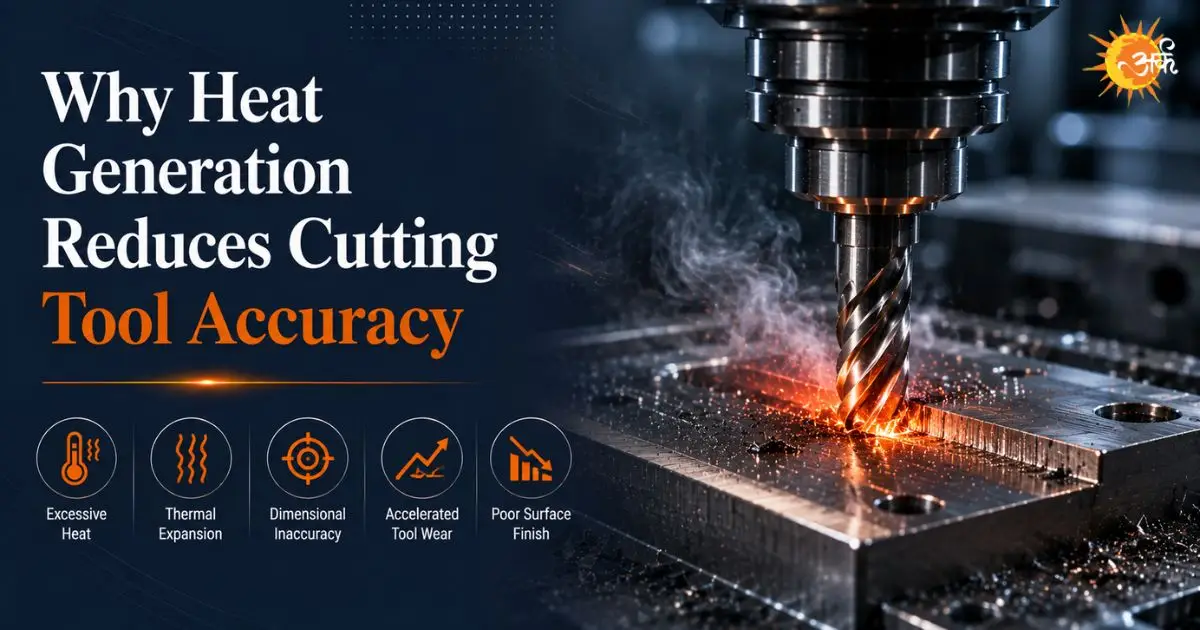
Why Heat Generation Reduces Cutting Tool Accuracy is a critical consideration in modern metal machining operations where precision, productivity, and tooling reliability determine manufacturing success. During machining, enormous friction develops between the cutting tool and workpiece material. This friction rapidly converts mechanical energy into thermal energy.
When heat accumulation exceeds manageable levels, machining accuracy deteriorates substantially. Dimensional inconsistency, tool deformation, and premature wear become increasingly difficult to control. For manufacturers operating in high-precision industries, thermal management is not optional. It is indispensable.
Understanding the Relationship Between Heat and Tool Accuracy
Cutting tool accuracy depends heavily on thermal stability. As temperatures rise during machining, the cutting tool expands microscopically. Even minimal thermal expansion can alter tool geometry and compromise dimensional precision.
Excessive heat affects:
- Cutting edge sharpness
- Tool rigidity
- Chip evacuation stability
- Surface finish quality
- Geometric consistency
High-speed machining environments intensify these challenges further. Without effective thermal control measures, machining tolerances become increasingly unpredictable.
Major Sources of Heat in Cutting Operations
Heat generation in machining originates from multiple sources operating simultaneously under intense mechanical pressure.
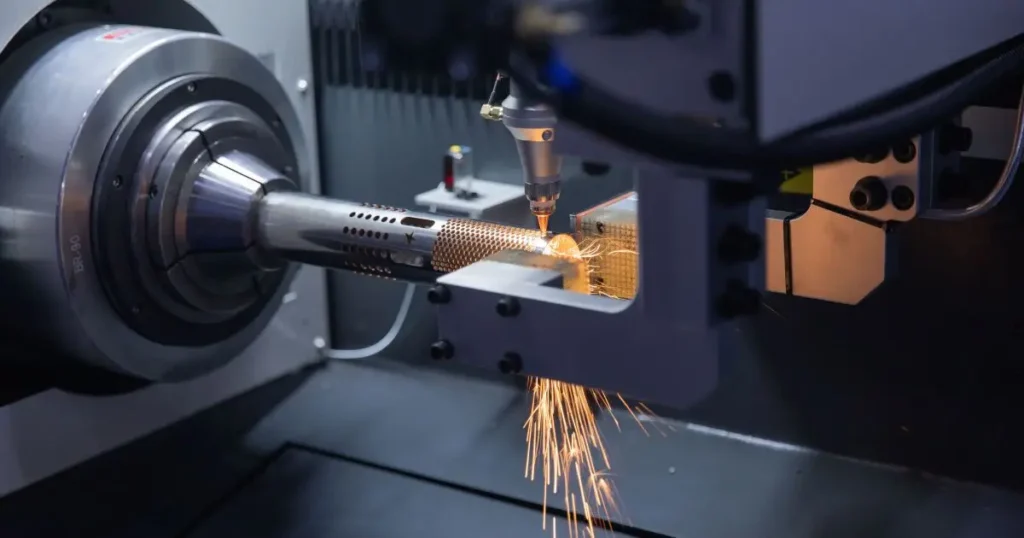
The primary contributors include:
- Friction between the cutting tool and workpiece
- Plastic deformation of the material
- Chip formation processes
- Tool flank contact
- High spindle speeds
Among these, friction at the cutting interface generates the majority of thermal energy. This thermal concentration directly impacts tool integrity and machining precision.
Thermal Expansion and Dimensional Instability
Thermal expansion is one of the most detrimental consequences of excessive heat generation. As tool temperatures rise, microscopic dimensional changes occur within the cutting edge and surrounding tool body.
These distortions may appear insignificant initially. However, in precision machining environments, even minute deviations can lead to:
- Incorrect component dimensions
- Poor tolerance control
- Inconsistent part geometry
- Surface irregularities
Thermal instability is especially problematic during long machining cycles where continuous heat accumulation amplifies dimensional inaccuracies.
How Heat Accelerates Tool Wear
Heat dramatically accelerates wear mechanisms within cutting tools. Elevated temperatures weaken the hardness and structural integrity of the tool substrate, making it more susceptible to abrasion and deformation.
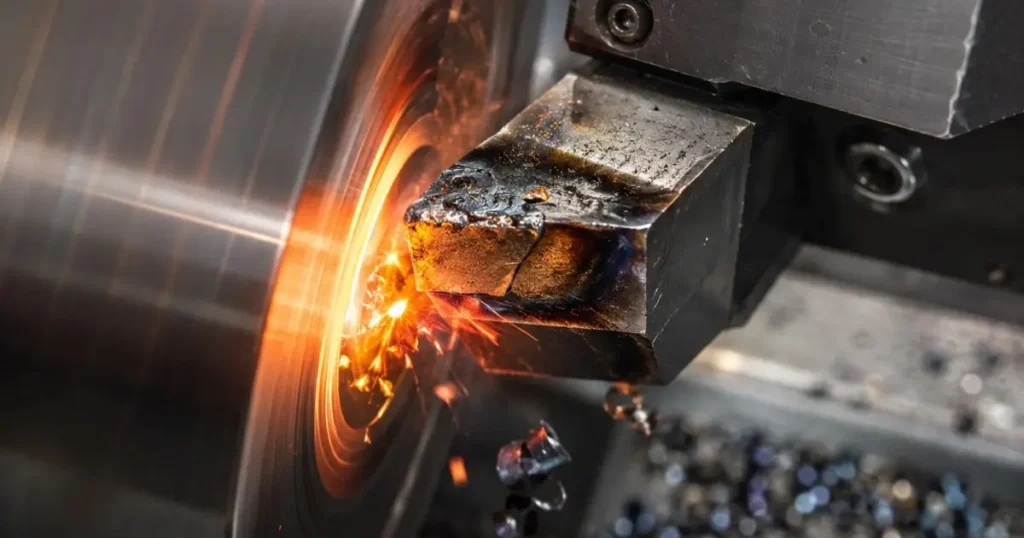
Common heat-induced wear mechanisms include:
- Oxidation wear
- Diffusion wear
- Crater wear
- Thermal cracking
- Plastic deformation
The application of thermal wear-resistant coating solutions helps reduce heat penetration while preserving tool hardness during aggressive machining conditions.
Influence of Heat on Surface Finish Quality
Surface finish quality deteriorates rapidly when excessive thermal buildup occurs during machining operations. Heat destabilizes the cutting process and creates inconsistent chip formation patterns.
As a result, manufacturers may observe:
- Surface discoloration
- Rough finishes
- Burr formation
- Material tearing
- Microstructural damage
Maintaining thermal equilibrium is essential for achieving smooth, uniform surface finishes in high-precision manufacturing applications.
Material Deformation Caused by Elevated Temperatures
Heat affects not only the cutting tool but also the workpiece material itself. Excessive thermal energy can soften the material being machined, leading to unpredictable deformation and dimensional inconsistencies.
Certain alloys become particularly vulnerable to:
- Thermal distortion
- Residual stress formation
- Warping
- Microcracking
Managing heat effectively ensures greater dimensional stability throughout the machining process.
Importance of Cooling and Lubrication Systems
Efficient cooling and lubrication systems are fundamental for minimizing thermal stress during machining. These systems reduce friction, dissipate heat, and stabilize cutting conditions.
Common cooling methods include:
- Flood cooling
- Mist lubrication
- Minimum Quantity Lubrication (MQL)
- Cryogenic cooling
Proper cooling selection depends on material properties, machining speed, and tooling requirements. Effective lubrication significantly improves thermal regulation and cutting consistency.
Role of Advanced Coatings in Heat Management
Modern machining operations increasingly depend on specialized coatings to protect tools from extreme thermal conditions. Advanced coatings create a protective barrier that reduces heat transfer and friction.
Benefits of high temperature coating for cutting tools. include:
- Improved thermal insulation
- Reduced oxidation
- Enhanced wear resistance
- Lower friction coefficients
- Extended tool lifespan
These coatings enable machining systems to maintain higher accuracy levels even under elevated cutting temperatures.
Surface Engineering Technologies for Thermal Protection
Advanced surface engineering technologies have transformed modern machining performance. Sophisticated deposition techniques now create highly durable thermal barriers with exceptional adhesion characteristics.
The implementation of Advanced coating deposition process technologies allows manufacturers to improve:
- Surface hardness stability
- Thermal resistance
- Oxidation protection
- Friction reduction
- Coating uniformity
These innovations are essential for maintaining machining accuracy in demanding industrial environments.
Comparing Different High-Temperature Coating Solutions
Selecting the appropriate coating is crucial for effective thermal management. Different coating materials provide distinct performance characteristics depending on the machining application.
Common high-temperature coatings include:
- Titanium Aluminum Nitride (TiAlN)
- Aluminum Titanium Nitride (AlTiN)
- Chromium Nitride (CrN)
- Diamond-Like Carbon (DLC) coatings
An effective strategy for Selecting coatings for high-temperature machining involves evaluating thermal stability, hardness, oxidation resistance, and friction performance.
Best Practices for Minimizing Heat-Related Machining Errors
Reducing thermal inaccuracies requires a comprehensive machining strategy focused on heat management and process optimization.
Key best practices include:
- Optimizing cutting speeds and feed rates
- Applying advanced coatings
- Maintaining proper lubrication
- Monitoring tool wear regularly
- Ensuring effective chip evacuation
- Using heat-resistant tooling materials
Implementing strong Surface Protection In high heat environments strategies significantly improves machining consistency and operational reliability.
Common Warning Signs of Excessive Thermal Stress
Operators should identify thermal stress indicators early before severe tool damage or machining failure occurs.
Common warning signs include:
- Burn marks on workpieces
- Excessive vibration
- Rapid edge wear
- Surface discoloration
- Unusual cutting noise
- Inconsistent dimensional accuracy
Timely intervention helps prevent catastrophic tool failure and costly production disruptions.
Future Innovations in Heat Control Technologies
The future of machining technology is increasingly focused on intelligent thermal management systems and advanced material science.
Emerging innovations include:
- Self-cooling tool coatings
- Nano-structured thermal barriers
- AI-based heat monitoring systems
- Smart sensor-integrated tooling
- Adaptive cooling technologies
These developments are expected to revolutionize machining accuracy and significantly improve thermal efficiency across industrial manufacturing sectors.
Conclusion
Understanding Why Heat Generation Reduces Cutting Tool Accuracy is essential for manufacturers striving to maintain superior machining precision and long-term tooling reliability. Excessive heat negatively affects tool geometry, accelerates wear, compromises surface quality, and destabilizes machining operations.
By implementing advanced coatings, optimized cooling systems, and intelligent thermal management strategies, manufacturers can significantly improve machining consistency while extending tool lifespan. As industrial machining continues evolving, advanced approaches for Heat control in metal cutting operations will remain fundamental to achieving higher productivity and precision.
FAQs
Heat causes thermal expansion, tool deformation, and accelerated wear, all of which negatively affect machining precision and dimensional consistency.
The primary sources include friction between the tool and workpiece, chip formation, and material deformation during cutting.
Advanced coatings reduce friction, improve thermal insulation, and protect tools from oxidation and excessive wear during high-temperature machining.
Common signs include burn marks, rapid tool wear, poor surface finish, excessive vibration, and inconsistent dimensional accuracy.
The ideal cooling method depends on the application, but flood cooling, MQL, and cryogenic cooling are widely used for thermal management in demanding machining operations.
Looking to improve machining precision with advanced thermal protection coatings and high-performance surface engineering solutions? Discover innovative technologies designed to reduce heat buildup, extend tool life, and maximize machining accuracy.
Comments are closed