
 PVD Coating
Do you manage a manufacturing plant, run a tool shop, or work in procurement for a major industry like automotive or aerospace? If so, you know the daily battle against wear, friction, and premature component failure. Every minute a tool is down or a component fails under pressure, your business loses money.
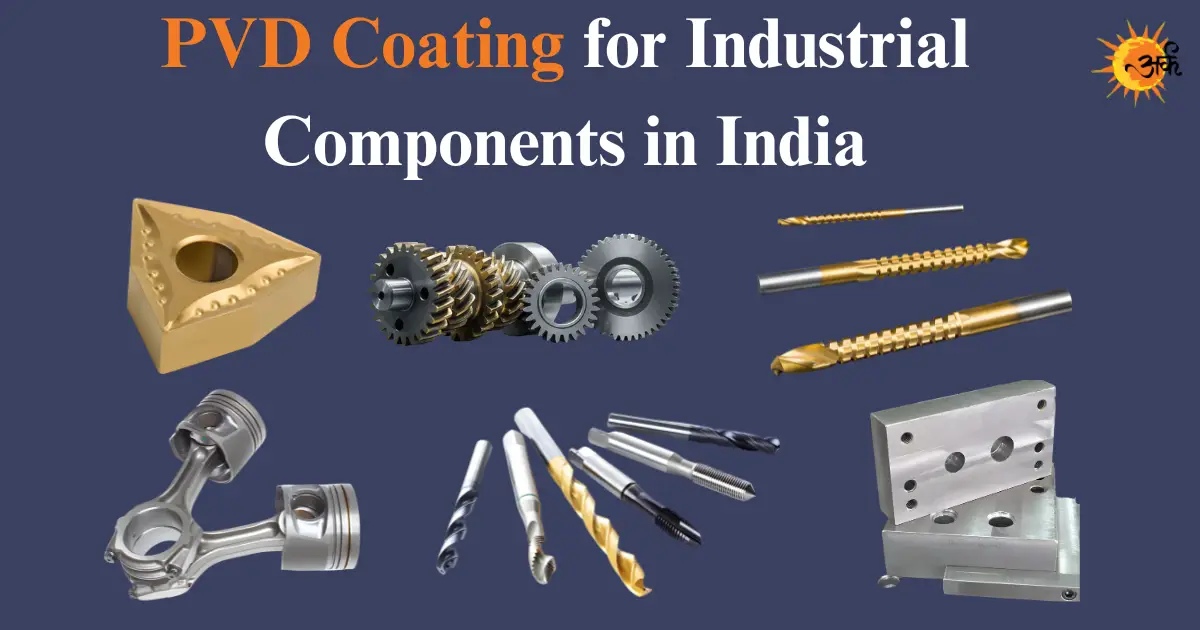
The secret weapon many successful manufacturers use to win this battle is Physical Vapor Deposition (PVD) coating. For businesses looking for reliable, world-class PVD Coating for Industrial Components in India, understanding this technology is the first step toward unlocking massive savings and superior operational efficiency.
This is your ultimate guide to PVD coating in India, covering how the process works, why it is essential, and how ARKA PVD Coating can be your trusted partner.
What is PVD Coating and Why It’s Superior
Understanding Physical Vapor Deposition (PVD)
At its simplest, the PVD coating process takes a solid material (like Titanium or Chromium), turns it into a plasma vapor, and then deposits it onto your component as an incredibly hard, thin film. This all happens inside a high-vacuum chamber, which ensures a super clean, atomic-level bond that essentially makes the coating part of the tool itself.
The resulting film is usually only 1 to 5 microns thick—that’s thinner than a strand of hair! Because the layer is so thin and precisely applied, it doesn’t change the shape or precision of the original component, which is crucial for high-tolerance parts.
PVD vs. Other Coatings (PVD vs other coatings)
Many industrial processes still rely on old methods like electroplating or chemical vapor deposition (CVD). While those have their uses, PVD offers clear advantages, especially in modern manufacturing:
- Superior Adhesion: The vacuum environment and process create a bond far stronger than traditional plating.
- High Purity & Cleanliness: PVD is an environmentally friendly, “clean” process that avoids the harsh chemicals and hazardous waste streams associated with electroplating.
- Performance at Heat: PVD films, particularly the hard ceramics, maintain their strength at very high temperatures, which is critical for high-speed machining.
The Strategic PVD coating benefits for Indian Industry

For Indian manufacturing plant managers, the decision to use PVD coating is an investment that pays itself back many times over. The PVD coating benefits are directly linked to reducing costs and increasing output.
1. Superior Durability and Tool Life Extension
The coating forms a protective barrier that is often several times harder than the base steel. This dramatically improves wear resistance and leads to significant tool life extension coating, often increasing tool life by three to ten times. This means fewer tool purchases and less time wasted on machine downtime for replacements.
2. High Thermal and Chemical Stability
Industrial applications frequently involve extreme heat. PVD coatings provide high temperature PVD coating capabilities that prevent the underlying material from softening or failing. Additionally, they act as reliable oxidation resistance coatings, protecting components from thermal breakdown and corrosion in harsh, chemical environments.
3. Reduced Friction and Enhanced Efficiency
Many PVD film types, such as Diamond-Like Carbon (DLC), are known for being low friction nano coatings. This is a game-changer for moving parts. Reduced friction means:
- Less heat generated during operation.
- Smoother, faster operation (higher cutting speeds).
- Lower energy consumption.
4. Reliable Erosion Protection
In environments where parts are subjected to a constant barrage of abrasive material—like in mining, quarrying, or certain casting operations—you need erosion protection PVD coating. The dense, hard film shields the substrate, preventing material loss and maintaining the component’s original form and function.
Targeted PVD Solutions for Key Industrial Components
The true value of PVD lies in its ability to be tailored to specific applications. ARKA PVD offers specialized industrial PVD coating services across vital sectors.
Cutting Tools, Dies, and Molds (PVD coating for cutting tools dies molds India)
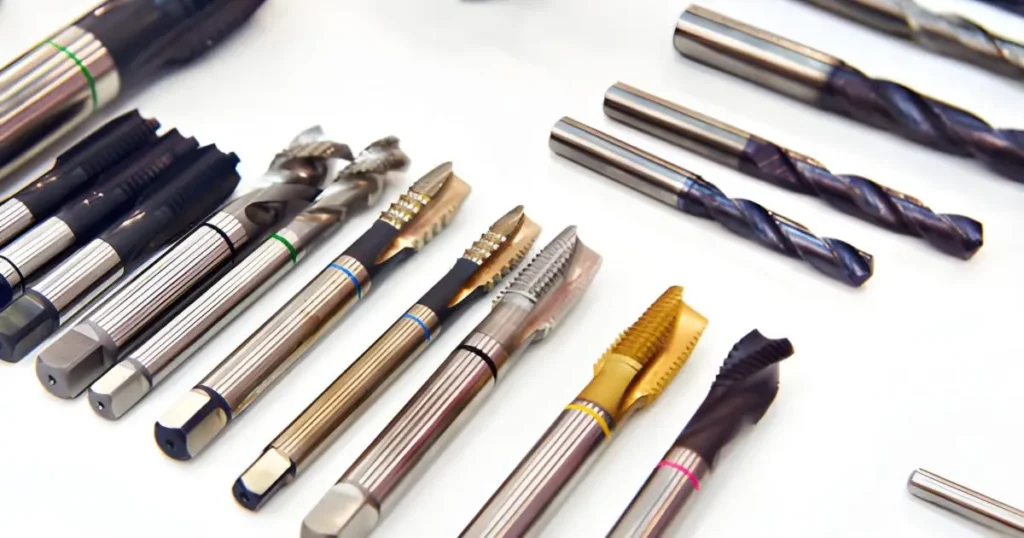
This is where PVD coating delivers its most immediate ROI.
- Cutting Tools: Coatings like Titanium Nitride (TiN) and Aluminum Titanium Nitride (AlTiN) are foundational for PVD for cutting tools (drills, end mills, inserts). They allow operators to push tools harder and faster, boosting productivity. The sheer hardness of the film means less friction and greater sharpness retention.
Molds and Dies: Components used in forging, pressing, and die-casting—like PVD coating for forging dies and coating for die casting molds—are subjected to massive pressure and heat. Specialized PVD coatings, such as ALTIFOR, are excellent at fighting galling and material sticking, ensuring consistent part quality and extending die life dramatically.
Automotive & Aerospace (benefits of PVD coating for automotive components India)
In these high-stakes industries, precision and reliability are non-negotiable. PVD coatings are essential for maximizing the performance of critical components.
- Automotive: Coatings on engine valves, piston rings, and other moving parts provide superior wear protection. The benefits of PVD coating for automotive components include reduced friction, which directly leads to improved fuel efficiency and extended engine life.
- Aerospace: Landing gear components, turbine blades, and fasteners are constantly exposed to extreme temperatures and corrosive elements. Coatings provided for aerospace & medical tools ensures reliable performance under the most challenging flight conditions.
Why Specialized Services Matter
Every application is unique. A generic coating applied to a highly stressed forging die will fail quickly. This is why working with a specialist who understands the demands of PVD Coating for Industrial Components in India—from tool steel hardness to required operating temperatures—is non-negotiable. Our engineering team selects the precise blend of coating material and process to guarantee optimum results, whether you require high temperature PVD coating or simple wear resistance.
Medical, Oil & Gas, and Other Applications
The versatility of PVD means it touches almost every industry:
- Medical: PVD coatings like TiN are naturally biocompatible. This allows for the use of titanium coating on surgical tools and implants, offering a non-toxic, highly wear-resistant surface.
- General Engineering: We handle industrial components for everything from high-speed steel (HSS) components to complex parts for the Oil & Gas sector requiring maximum corrosion protection.
Read More
Practical Considerations: Compatibility, Cost, and ROI
Material Compatibility and Process
PVD coatings primarily work best on electrically conductive metallic substrates, including:
- Carbide cutting tools
- Tool steel (HSS, D2, M2)
- Stainless steel and Titanium alloys
The surface must be meticulously clean before treatment. At ARKA, we ensure rigorous pre-treatment cleaning to guarantee the legendary adhesion PVD is known for.
Understanding PVD coating cost india and ROI
While the cost of a PVD coating job is higher than basic treatments like black oxide,but the PVD coating cost is incredibly small when viewed as a fraction of the component’s total lifespan.
The Return on Investment (ROI) is calculated not just in cents-per-part, but in:
- Reduced Downtime: Machines running longer without tool changes.
- Increased Speed: Components capable of handling higher performance parameters.
- Fewer Rejects: Consistent, high-quality output due to less component wear.
The massive gains in efficiency and tool lifespan quickly offset the initial coating expense.
Selecting the Best industrial PVD coating services India
When you are ready to implement this technology, choosing the right partner is paramount. You need more than just a coating service; you need a solution provider.
ARKA PVD Coating is recognized as one of the top pvd coating companies in india, specializing exclusively in high-performance industrial coatings.
We offer:
- Depth of Experience: Years of focused expertise in industrial components.
- Specialized Range: Access to cutting-edge coating materials, including TiN, AlCrN, and advanced Altin formulations, ensuring you get the perfect solution for your specific metal and application.
- Quality Assurance: Strict quality control checks to meet the high standards of automotive and aerospace clients. We are the Best pvd coating b2b india partner for manufacturers prioritizing quality and long-term value.
Conclusion
PVD coating is the future of surface engineering, transforming the way manufacturers approach component durability and performance. It is a critical investment for any plant manager, tool shop, or procurement officer in India aiming for global standards of efficiency and reliability. Mastering the application of PVD Coating for Industrial Components in India is the key to achieving unparalleled operational efficiency and cost savings.
Ready to maximize the life and performance of your industrial assets?
Contact ARKA PVD Coating today to speak with one of our experts and find the precise coating solution for your toughest challenge.
Transform your tools. Transform your business.
Frequently Asked Questions (FAQs)
1. What is the typical coating thickness, and does it affect component size?
PVD coatings are extremely thin, usually ranging from 1 to 5 microns ($\mu$m). This minimal thickness means the coating does not significantly alter the component’s critical dimensions or tolerances, making it ideal for precision engineering.
2. Can PVD coating be removed if a tool needs to be reground or recoated?
Yes, PVD coatings are designed to be removable. Specialist stripping solutions allow the coating to be taken off without damaging the underlying substrate. This is essential for expensive tools and dies that need to be reground, resharpened, and then recoated (recoating for tool life extension).
3. Is PVD coating harmful to the environment?
No. PVD is considered an environmentally friendly process. Unlike traditional electroplating, it is a clean, dry process that does not produce toxic sludge, hazardous waste, or heavy metal contamination.
4. What temperature range can PVD coatings withstand?
Specific PVD coatings are engineered for different thermal ranges. For instance, TiN works well up to about 600°C, while coatings containing aluminum, such as ARKA ALCRON and ARKA TALIN, can often withstand continuous operational temperatures exceeding 900°C, classifying them as high temperature PVD coating solutions.
5. What types of materials cannot be PVD coated?
While PVD is highly versatile, it is primarily effective on high-melting-point, electrically conductive metals (steels, carbides, titanium). Materials like rubber, many plastics, and very soft, low-melting-point alloys are not suitable for the standard PVD process due to the heat and vacuum involved.
How TiN (Titanium Nitride) Coating Extends The Life Of Cutting Tools
December 11, 2025 9:34 am[…] Read more: PVD Coating for Industrial Components in India […]
The 4-Step PVD Coating Process | Arka PVDCoating
December 16, 2025 9:47 am[…] Read more: PVD Coating for Industrial Components in India […]