


 PVD Coating
Introduction
TiSiN coating is an advanced PVD coating used in high-performance industrial applications. In today’s advanced manufacturing environment, improving tool performance and extending component life are critical for maintaining productivity and reducing operational costs. One of the most effective ways to achieve this is through PVD coating services in India, which use advanced surface engineering technologies such as Physical Vapor Deposition (PVD) coatings.
Among the latest developments in this field is TiSiN (Titanium Silicon Nitride) coating, a high-performance solution designed for demanding industrial applications. In particular, these coatings offer superior wear resistance, excellent thermal stability, and enhanced oxidation resistance, making them ideal for high-speed machining and extreme working conditions.
This article provides a complete overview of TiSiN coating, its properties, advantages, and industrial applications.
What is TiSiN Coating?
TiSiN coating is a PVD-applied nanocomposite coating composed of Titanium (Ti), Silicon (Si), and Nitrogen (N). In industrial applications, TiSiN PVD coating services are widely used to enhance tool performance and durability.
The addition of silicon into the titanium nitride structure creates a nanostructured coating, which significantly improves mechanical and thermal properties. As a result, the coating performs better under high stress conditions.
Unlike traditional coatings, TiSiN forms a fine-grained microstructure that enhances hardness and resistance to wear and oxidation. Therefore, it is highly suitable for applications where tools are exposed to high temperatures, friction, and mechanical stress.
How TiSiN Coating Works
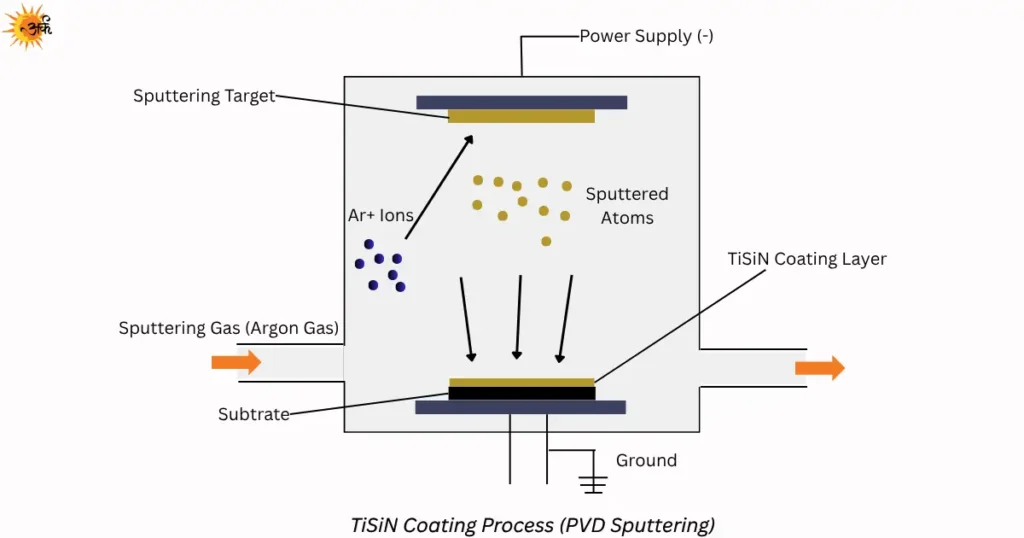
The performance of TiSiN coating comes from its nanocomposite structure. Titanium nitride provides basic hardness and wear resistance, while silicon forms a protective amorphous matrix. Together, they create a strong barrier against heat and oxidation.
At high temperatures, TiSiN coatings form a protective oxide layer. This helps reduce further degradation and allows tools to operate efficiently even under extreme conditions.
Key Properties of TiSiN Coating
1. Extremely High Hardness
One of the most important characteristics of TiSiN coating is its extremely high hardness. Because of this, tool wear is significantly reduced.
2. Excellent Thermal Stability
In addition to hardness, TiSiN coatings offer excellent thermal stability. They can withstand very high temperatures, making them suitable for high-speed machining operations.
3. Superior Oxidation Resistance
Another key benefit is improved oxidation resistance. Due to the presence of silicon, tools maintain performance even at elevated temperatures.
4. Low Friction Characteristics
These coatings also help reduce friction between the tool and the workpiece. As a result, surface finish improves and heat generation is minimized.
5. Enhanced Wear Resistance
The nanocomposite structure provides strong resistance against abrasive and adhesive wear. Furthermore, it helps reduce edge chipping during machining.
Advantages of TiSiN Coating
Increased Tool Life
One of the major advantages is increased tool life. Tools coated with TiSiN last significantly longer compared to uncoated tools.
Higher Cutting Speeds
These coatings also enable machining at higher cutting speeds. As a result, productivity improves without compromising tool performance.
Reduced Downtime
When tool life increases, the frequency of tool changes decreases. Therefore, production downtime is minimized.
Improved Productivity
Better performance and durability lead to higher productivity. In addition, overall operational efficiency improves.
Suitable for Dry Machining
TiSiN coatings perform effectively in dry machining environments. This reduces the need for coolants and lowers operational costs.
TiSiN vs TiN Coating
| Feature | TiN Coating | TiSiN Coating |
|---|---|---|
| Hardness | Good | Very High |
| Temperature Resistance | Moderate | High |
| Oxidation Resistance | Moderate | Excellent |
| Tool Life | Standard | Extended |
Overall, TiSiN coating is a more advanced option for high-performance applications.
TiSiN vs TiAlN Coating
| Feature | TiAlN | TiSiN |
|---|---|---|
| Heat Resistance | High | Very High |
| Wear Resistance | High | Higher |
| Cutting Performance | Excellent | Superior |
In demanding conditions, TiSiN is often preferred due to its superior performance.
Industrial Applications of TiSiN Coating
Cutting Tools
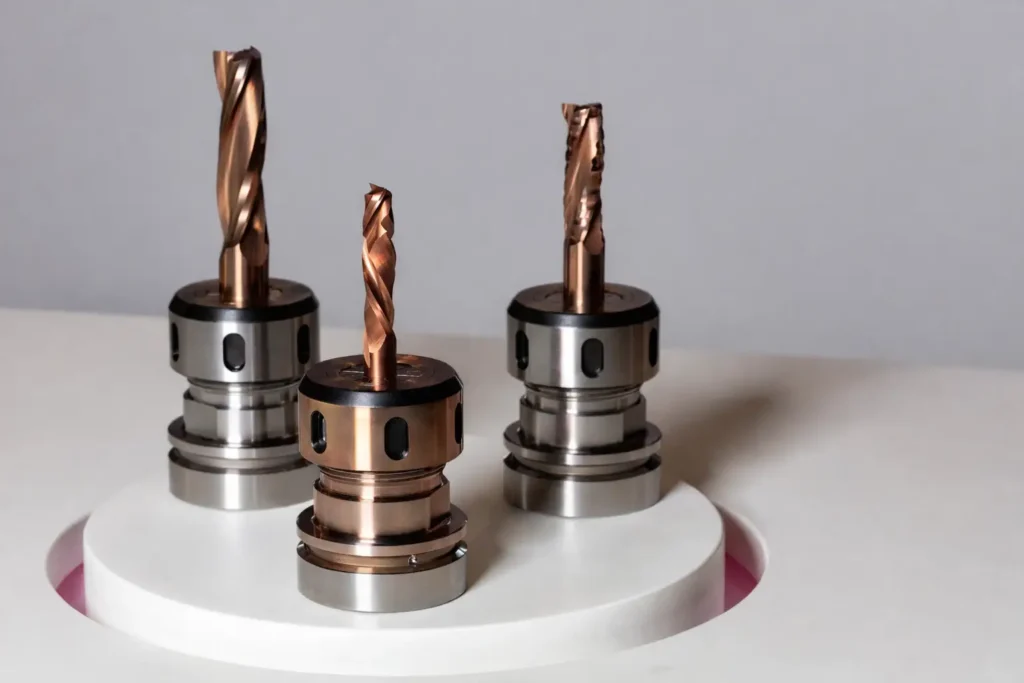
These coatings are widely applied to tools such as drills, end mills, inserts, and taps. In particular, PVD coating for cutting tools helps improve wear resistance, extend tool life, and enhance machining performance.
Automotive Industry
In the automotive sector, TiSiN coatings are used for engine parts and transmission components. This helps improve durability and performance.
Aerospace Industry
Aerospace components require coatings that can withstand high temperatures and stress. Therefore, TiSiN becomes an ideal solution.
Mold and Die Industry
Molds and dies coated with TiSiN show improved durability. In addition, wear is significantly reduced during repeated operations.
General Engineering
TiSiN coatings are also used in various engineering applications. In particular, they are beneficial where performance and longevity are critical.
Why Choose PVD Coating for TiSiN?
PVD coating technology offers several advantages. These include uniform coating thickness, excellent adhesion, and minimal distortion.
Moreover, it is an environmentally friendly process, making it suitable for modern manufacturing requirements.
How to Choose the Right Coating for Your Application
Selecting the right coating depends on multiple factors, including operating temperature, material type, and cutting speed.
For example, high-temperature applications benefit more from TiSiN coatings. Therefore, understanding your operating conditions is essential before selecting a coating.
Conclusion
TiSiN coating is a high-performance PVD coating that provides superior hardness, thermal stability, and wear resistance.
It is widely used in industries such as automotive, aerospace, manufacturing, and tooling. As a result, manufacturers can improve tool life, increase productivity, and reduce operational costs.
Read More
To learn more about PVD coating technologies and industrial applications, explore our detailed guides:
- What is PVD Coating?
- PVD Coating Process Explained
- Difference Between PVD and Powder Coating
- Industrial Coatings for Extreme Environments
- Coatings for High Performance Pumps and Compressors
- PVD Coating for Industrial Components
Frequently Asked Questions
TiSiN coating is widely used for cutting tools, molds, and industrial components that operate under high temperature and high wear conditions. It improves tool life and performance in demanding machining environments.
TiSiN coatings are applied using Physical Vapor Deposition (PVD) technology, where a thin, uniform coating layer is deposited on the surface of tools and components.
The key advantages of TiSiN coating include:
high hardness
excellent wear resistance
superior thermal stability
improved oxidation resistance
TiSiN coating offers better thermal resistance and hardness compared to TiN coating, making it more suitable for high-speed and high-temperature machining applications.
Yes, TiSiN coatings are ideal for high-speed machining, as they can withstand high temperatures and reduce tool wear during operation.
TiSiN coatings are commonly used in industries such as:
automotive manufacturing
aerospace
cutting tool production
mold and die manufacturing
Comments are closed